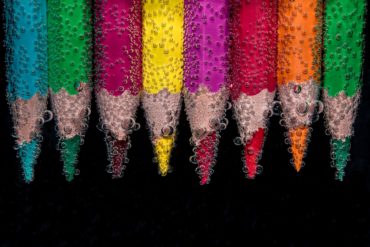
If you’re anything like me, you probably have a pile of colored pencils too short to be sharpened any further somewhere in your studio. Pencils are expensive and you just can’t bear to throw away the leftovers. . . but what can you do with them? Like many artists, I’m reluctant to throw. . . read more
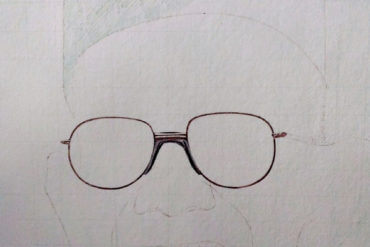
In today’s article I’ll be using traditional colored pencils to finish a project that began with a drawing in water-soluble colored pencil. I started this drawing using brushes and a homemade “palette” of colors drawn with the water-soluble pencils. If you haven’t. . . read more
Today, I’ll show you how to start a colored pencil drawing with water soluble colored pencils. I’ll be using Strathmore 300 lb. watercolor paper and Faber-Castell Art Grip Aquarelle pencils. If you’re following along, you’ll also need a few other supplies, including gummed. . . read more
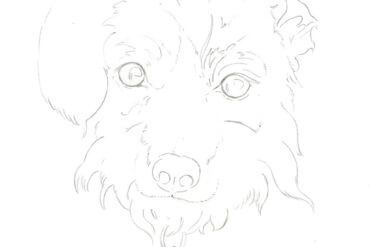
If you work with colored pencil for any length of time, chances are good you’ll be drawing hair at some point. Being able to create beautiful, realistic-looking hair is a must. . . but how do you get it right? Well before we get to specific examples, here are a few general tips that apply. . . read more
No matter how carefully you plan and render a composition, not every drawing turns out as you expect. Even among those drawings that do turn out well, every now and again, you’ll have occasion to wish there was a way to make changes or improvements. Below is The Sentinel. It was the. . . read more
There are many ways to combine colored pencil with other media and achieve a wide range of results. Today, I’m going to demonstrate using graphite as the foundation for your drawing and glazing or layering colored pencil over to create full color artwork. Here are a few important things. . . read more
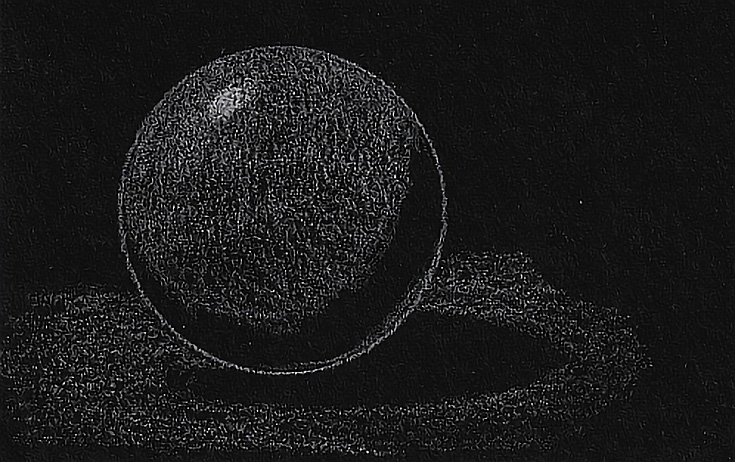
Creating texture in colored pencil can be a time consuming and often frustrating proposition. One way to add dramatic texture to any colored pencil drawing is to look for what I call “found” texture. . . read more
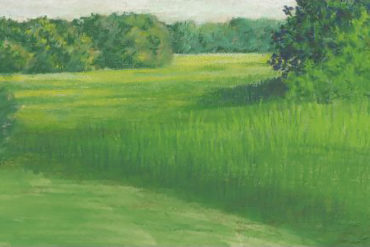
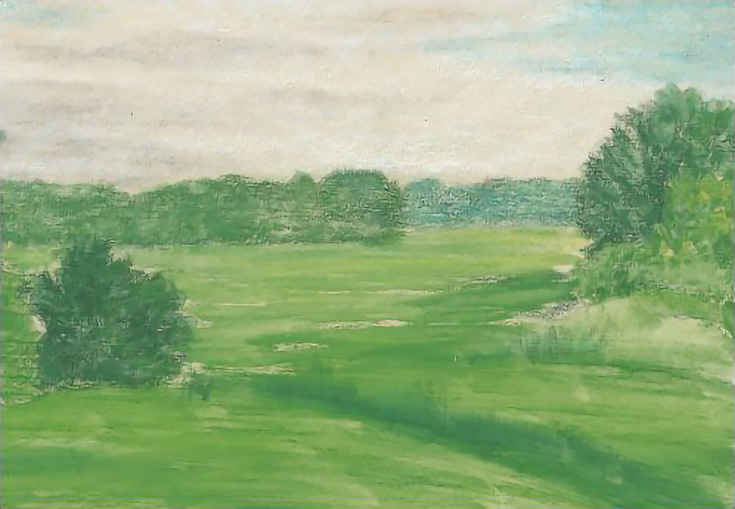
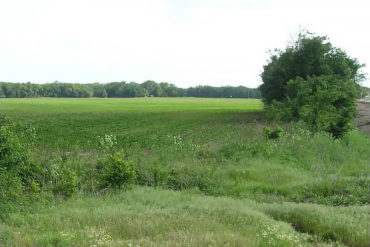
In my two previous articles, I’ve demonstrated the process for creating a landscape in colored pencil, using a classical painting method that involves starting with a complementary underpainting. You can read how to start your complementary underpainting here and how to begin your color. . . read more
In my previous article on drawing a complementary underpainting, we walked through the underpainting process using different kinds of reds to underpaint a green landscape. If you missed that article or would like a refresher, make sure to read that article first! This week, I’ll describe. . . read more
Today I’ll be demonstrating the complementary underpainting method for drawing a landscape, beginning with the underpainting itself. (Refer to my previous article on the color theory behind underpaintings, and how they can enhance your final drawing, if you haven’t read it. . . read more