
“Watercolor batik” is an amazing technique that combines melted wax and watercolors on rice paper to create an exciting-looking painting. Today I’ll be explaining how I use this technique in my own paintings.
If you’re ready, let’s get started!
First, I ink in my drawing on rice paper—which is normally a washi paper with small fibers—using a thin line, waterproof black pen. Then I apply melted paraffin wax to anything I want to stay white, just like using masking fluid.
I knew that I wanted some at least SOME color on my petals first, so I painted that in before adding wax.
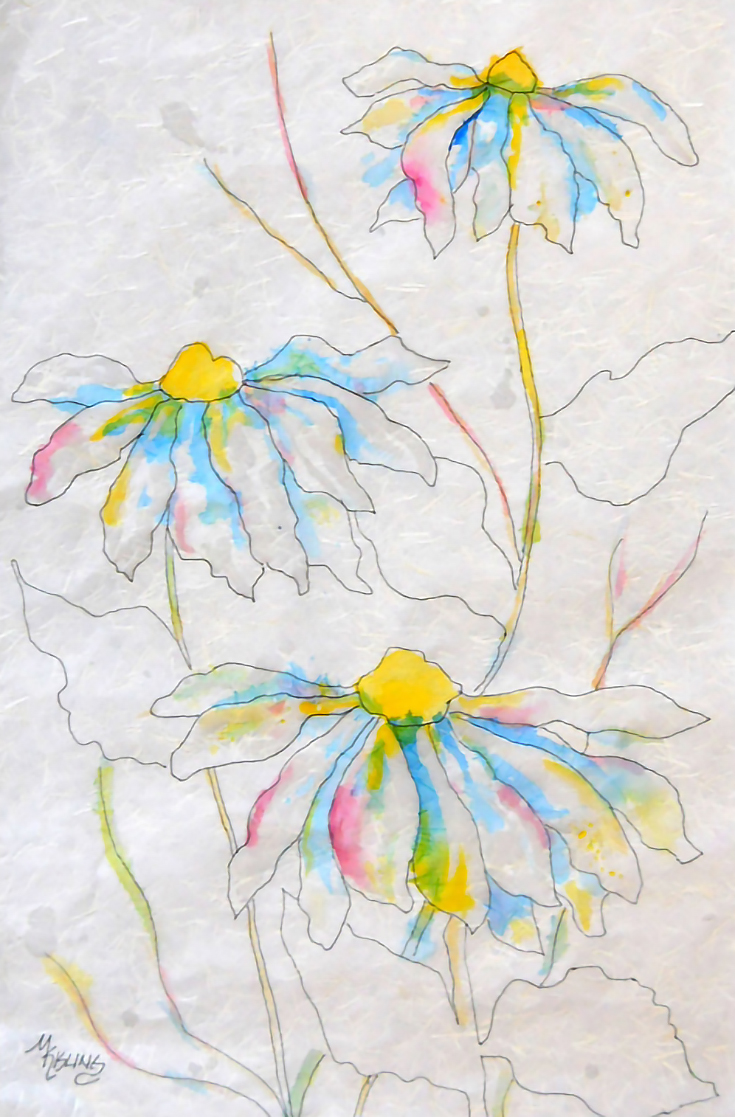
After that, I applied wax to all of the petals to protect them from further applications of paint. (Watercolors tend to run outside the ink lines on the rice paper, so to keep a sharp edge you must apply wax if you want those crisp lines.)
As soon as the petals are protected I can paint the leaves right next to the flowers. After the leaves are painted, I applied wax to them as well, and then painted the entire background. With all the detailed areas covered in wax, I don’t have to be so careful with the paint. . . I can paint right over the flowers.

The last step is to paint melted wax all over the background, let it harden, and then crumple up the entire painting to create cracks in the wax—this is the scary part! I then smooth it out and paint a dark color over the entire piece.
The darker color settles in the cracks which will give it that authentic “batik” look. . . but as you can see below, at this stage it will probably just look like a mess. At this point you need to trust the process.

The final step is to use some newspaper and an iron to remove all of the wax. Place a piece of newspaper over your painting and run your warm iron over it. The wax will melt and merge with the newspaper which you can peel up from your painting. As you do, the lighter areas you’ve protected will emerge.
It is always a wonderful surprise to see the beautiful and unique results of this process!

For more from Martha Kisling, please visit marthakisling.blogspot.com.

This post may contain affiliate links.