
Before a musician ever performs publicly at the recital, much preparation and practicing has already taken place. . . When the big day arrives and a nervous young driver goes in for the all-important driver’s test, many hours of practice behind the wheel are already increasing his or her likelihood of success.
These life experiences remind us that working out the kinks by practicing beforehand will always help us “deliver the goods” when it counts—and it’s no different for artists. By creating a painted study, we get our practice in too.
If you’re not familiar with it, a painted study is simply a preliminary exploratory work that’s made before starting the final painting.
I do not advocate completing a study prior to every painting, since the process can impede the spontaneity that is so important in many works of art. However, when working on a complex painting or a challenging commissioned piece, it may actually save time and will definitely diminish your apprehension about the project.
For example, last year I decided to create a figure painting of my dear father-in-law who had recently passed away. It was to be a gift for my grieving mother-in-law.
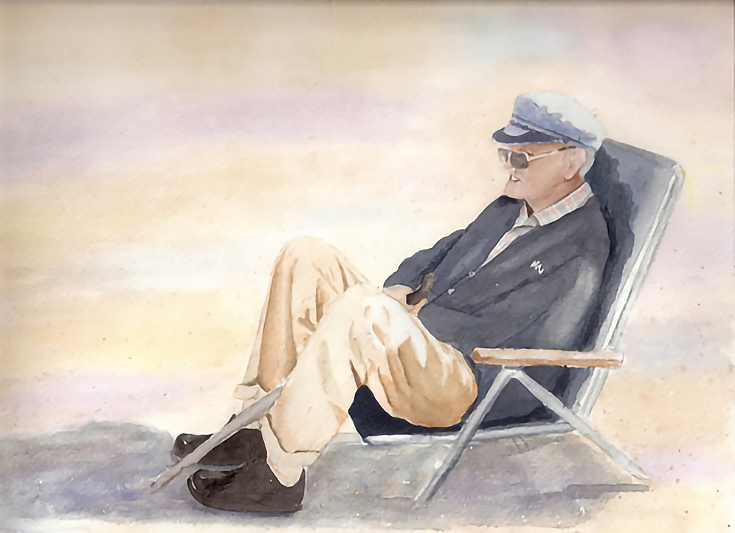
If you compare the study shown above to the finished painting below; you’ll see that certain color choices, compositional issues and other details were much improved in the final painting.
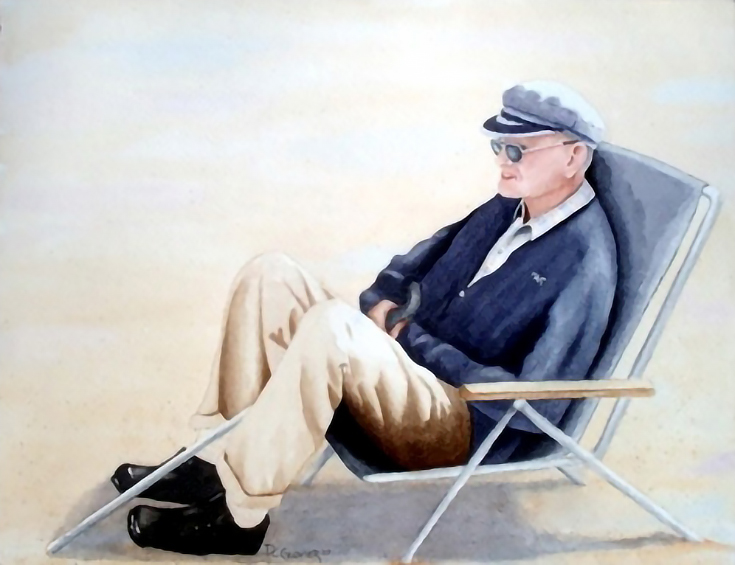
When I saw my mother-in-law’s emotional reaction I knew it had been worth the time spent on the study to get the results I wanted.
I’ve found preliminary studies to be advantageous in all different mediums, yet from my own experience, they are most helpful when I am working in transparent watercolor.
Depending on the painting, it generally takes me one to two hours to complete a study—but that time is not wasted. Here are a few advantages:
1. Although it is possible to fix mistakes in a watercolor painting, getting it right in the first pass keeps the painting fresh and spontaneous.
2. There are nearly always fewer problems with the actual painting after doing a study. Preliminary studies reveal where challenging areas may be in palette choices, color mixes, values, light source issues, composition, etc.
3. You’ll generally have a more enjoyable painting experience since you’ll already have an idea of where issues are likely to arise. You will be more confident, paint more quickly, and be less stressed.
4. With a “what have I got to lose?” attitude during the study phase, your brush strokes will tend to become less deliberate, more spontaneous. You’ll find yourself taking creative risks because it’s “only practice” after all.
5. And my favorite perk—once you’ve finished the painted study and begin your “real” painting, your study becomes a working copy that you can actually experiment on as you paint your final artwork.
Here’s another example of how a study helped my final artwork. The following image is a local scene that I wanted to paint using a limited palette.
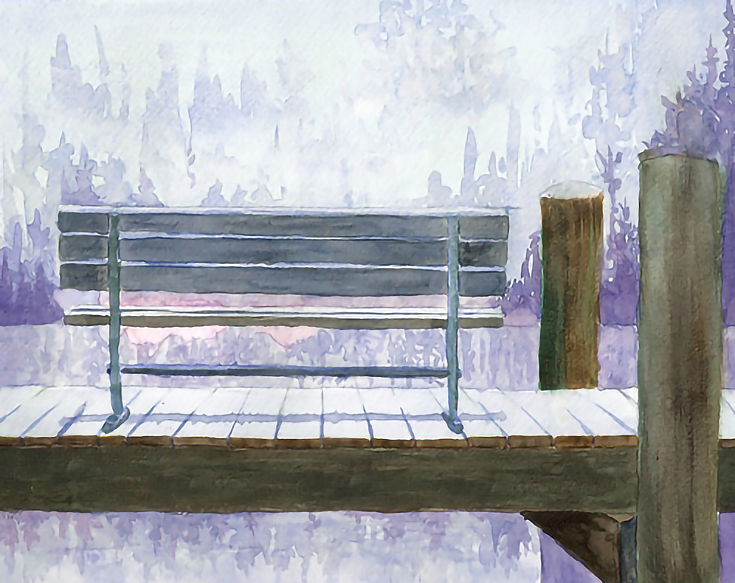
Due to my findings during the study phase of the painting (shown above) I adjusted the hue, composition, and values for my final image.
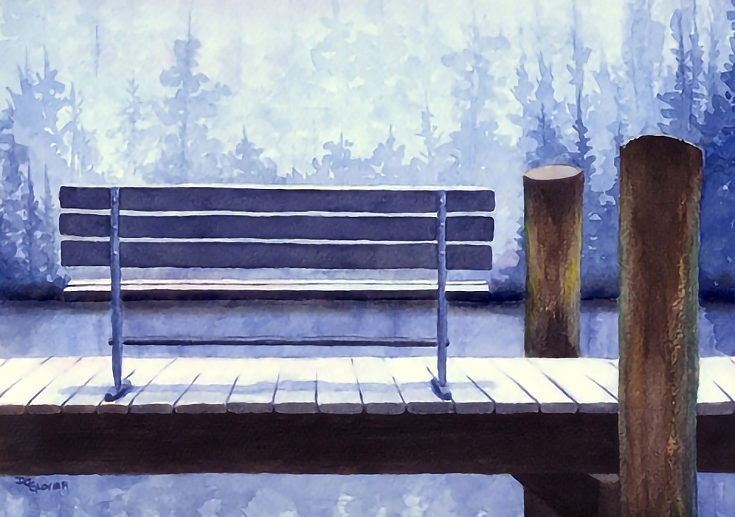
Although the study has a looser style which I like, the overall impact of the final painting is much closer to my vision for this artwork.
Do you ever create a preliminary study before important paintings?
If you haven’t, I encourage you to try it. Whether you’re working on a significant commission or some other important piece, painting a study beforehand will always add immensely to your process and bring about a much improved final result.

This post may contain affiliate links.