
Does every painting need a focal point? Not always, say some professionals, but others consider them an absolute requirement. In fact, many artists take focal points for granted, including them in a composition without thought for whether or not a successful painting might need it.
So what is a focal point and why do we use it?
A focal point is the area of emphasis around which the rest of a painting is centered and which pulls the viewer’s eye into the painting.
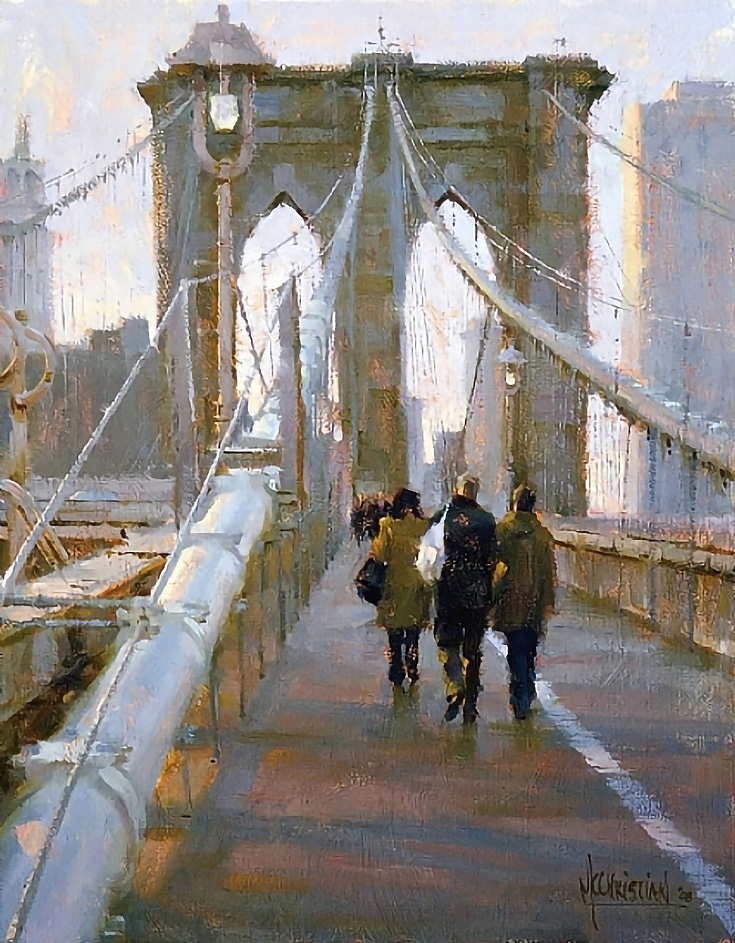
Often called the center of interest, a focal point could very well be a small portion of the painting, like the three figures emphasized by isolated value contrast in Making My Way Across by Jennifer McChristian.
In other paintings the focal point might actually be a focal area where a larger section of the painting engages the eye.
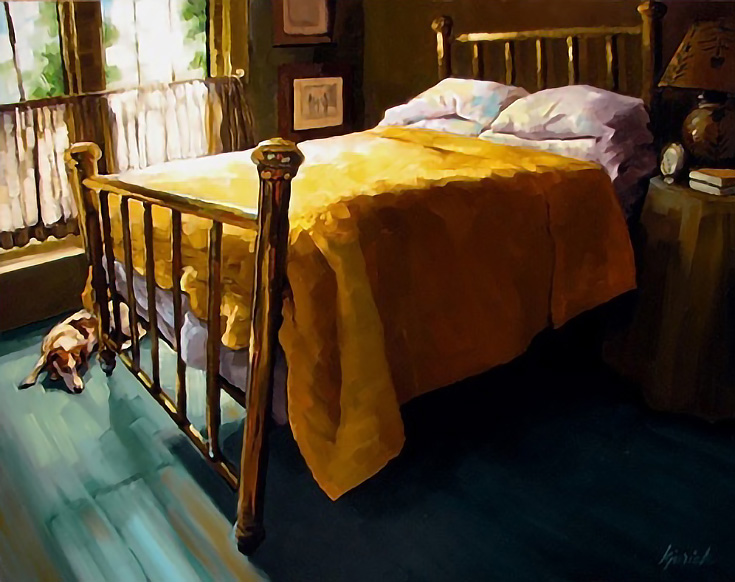
In Karen Jurick’s painting, The Long Wait, there’s a clear focal area created by the strong light on the bed, in the windows, and on the floor.
Still, for many works, the center of interest is the subject itself—and within that subject, some small area grabs our attention.
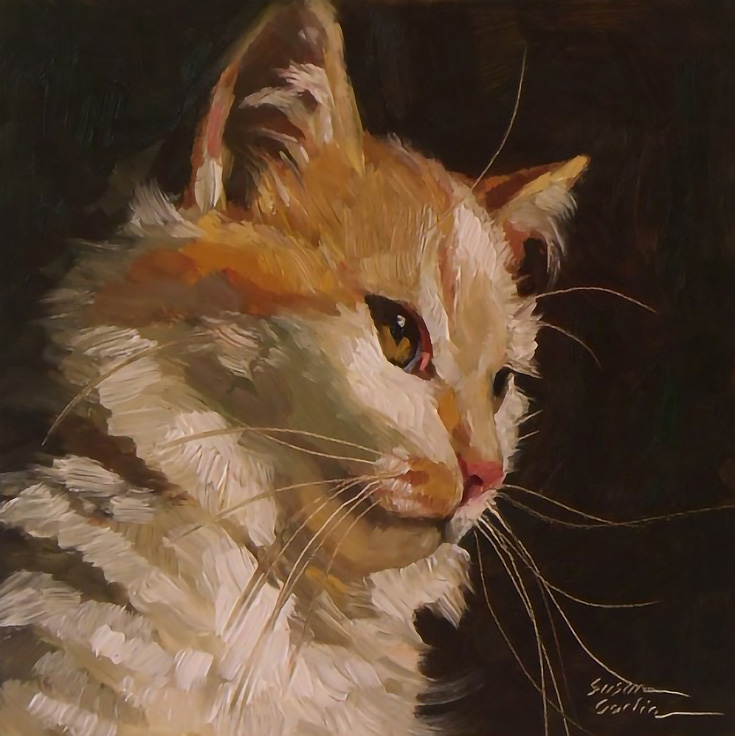
In Watching Birds by Susan Carlin, our eyes focus initially on the cat because of its luminous, light color against the dark background. Then we see the cat’s eye—a dark spot within a larger area of light—which leads us to explore the cat’s personality and expression as well.
These are all great examples of focal points in action, but there are other approaches to painting where a single area of emphasis is NOT needed. In many cases, the painting itself is the emphasis. The artist composes his or her painting with some sort of pattern throughout, causing entire canvas to become the center of attention.
Examples of paintings WITHOUT focal points:
We’re all familiar with the work of action painter, Jackson Pollock. Because of the nature of his painting process—distributing drips and splashes with repeated movement throughout the canvas—Pollock’s later work does not have a focal point.
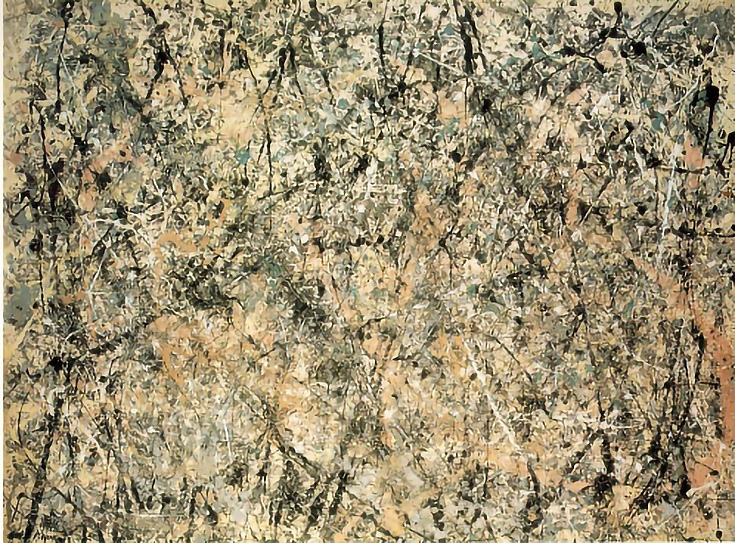
Instead, we’re engaged by the endless maze of paint, a pattern created by movement.
A different kind of repetition—that of a single image set in a tic-tac-toe grid—is found in Andy Warhol’s Marilyn, another work where no focal point exists.
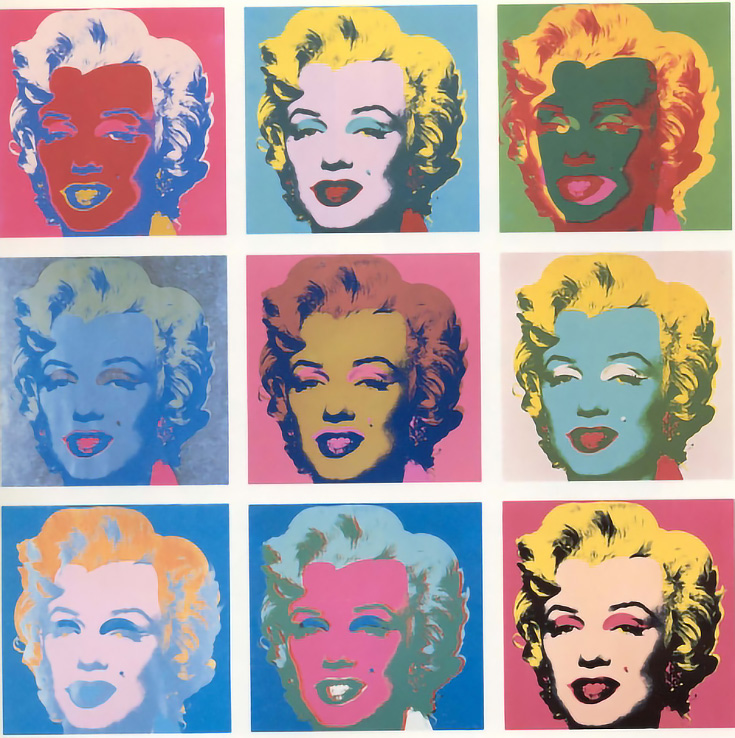
Even though one’s eye might enter through any one of the images, its repetition keeps the eye moving throughout the painting. It is impossible to say that the eye enters at any single point.
Two paintings that might surprise you:
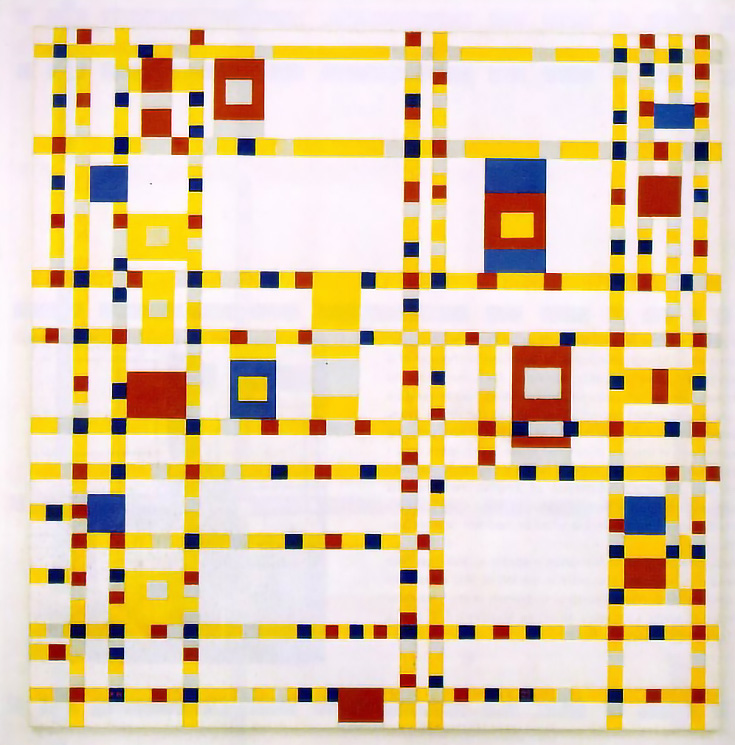
Non-objective painter Piet Mondrian arranged and repeated squares and rectangles into compositions that (while often subtle) do make use of a focal point.
In Broadway Boogie Woogie, below, we can find Mondrian’s focal point in the upper right quadrant of his painting—see the yellow rectangle inside the red square, sandwiched on top and bottom by the blue rectangles?
It’s a much more difficult task, however, to find a focal point in Impressionist painter Claude Monet’s Poplar Trees.

The alternation of trees and sky in this painting make the entire piece the focus.
We see then that the question of focal point has nothing to do with whether a painting is non-objective or realistic, but rather whether an initial point of emphasis is desirable.
So to answer our initial question—whether each painting needs to have a focal point—the answer is no. It’s entirely up to the artist to decide.
Yes, focal points are a valuable tool (just like any other compositional tool available) but as shown above, they’re not absolutely necessary to the success of a painting.

This post may contain affiliate links.