
Sometimes it’s fun to use a painting strategy that’s foreign to our usual approach. It refreshes the mind, recharges the brain and might open a creative thought or kindle a new direction in your art.
In today’s tutorial I’m going to show you how to use a basic Notan composition as a painting strategy. This tutorial will incorporate your habitual method of painting—along with a few detours—to help you create what I like to call a Notan-anchored painting.
Very simply, a Notan-anchored painting uses the Notan composition of a scene as its underpainting. This method gives unity to the piece as well as sharpening the artist’s perception of color. Here’s how it works:
Step 1: Gather your painting materials
You’ll need all your painting gear, a small canvas to paint on (8” x 10” or smaller), paper, pencil, black drawing marker and a 10-degree value scale.
Step 2: Pick a subject and create a Notan drawing
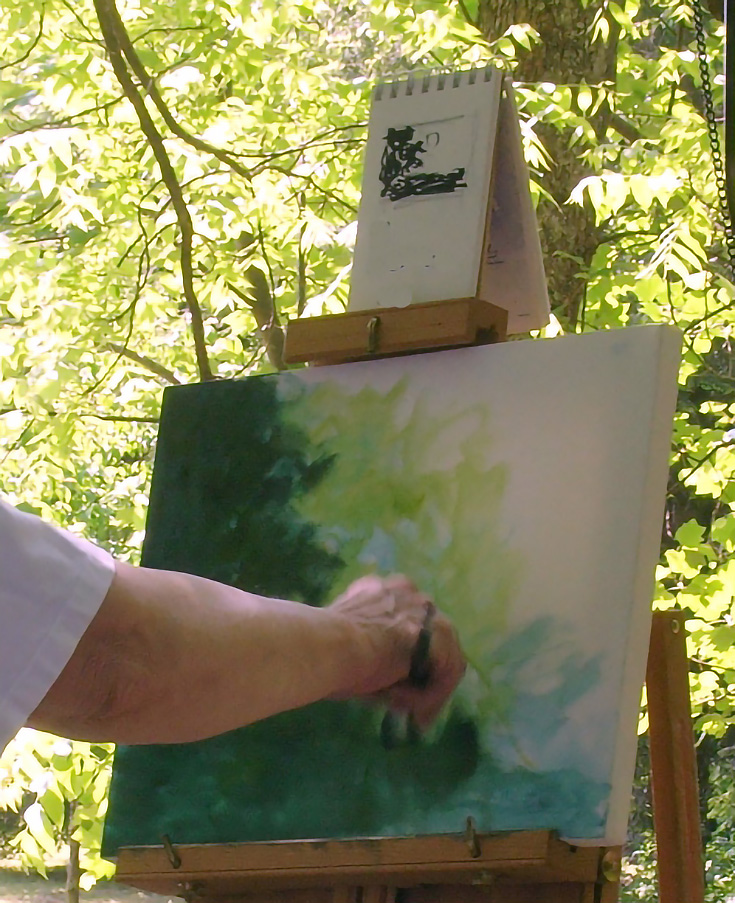
Choose a composition with a single light source and make a small Notan drawing of it. When finished, place the drawing beside or above your painting support (see below).
Step 3: Make a preliminary drawing on canvas
For this demonstration I’ll be working from this photo of bearded irises.
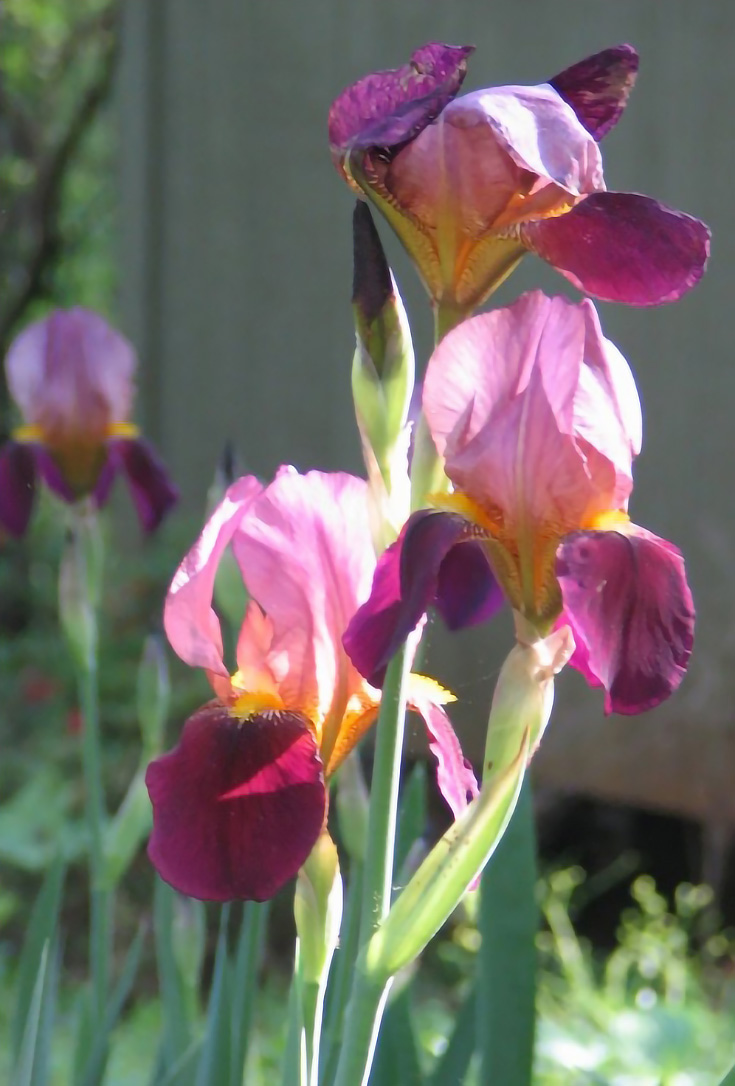
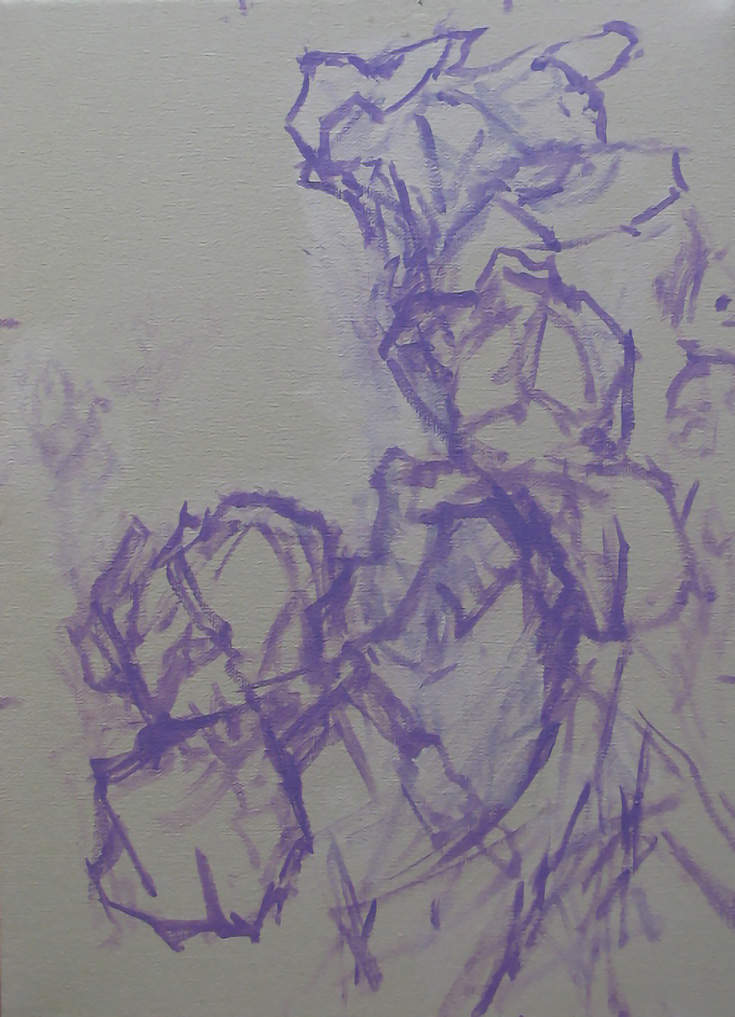
Feel free to develop your canvas drawing using the method that works best for you. I use a brush and thinned paint, but some painters prefer drawing on their canvas with charcoal or a pastel pencil. Edit and adjust until you’re pleased. Below you’ll see a photo of my preliminary drawing of the irises.
Step 4: Create your Notan underpainting
Here’s where we might part company with your ordinary method of working.
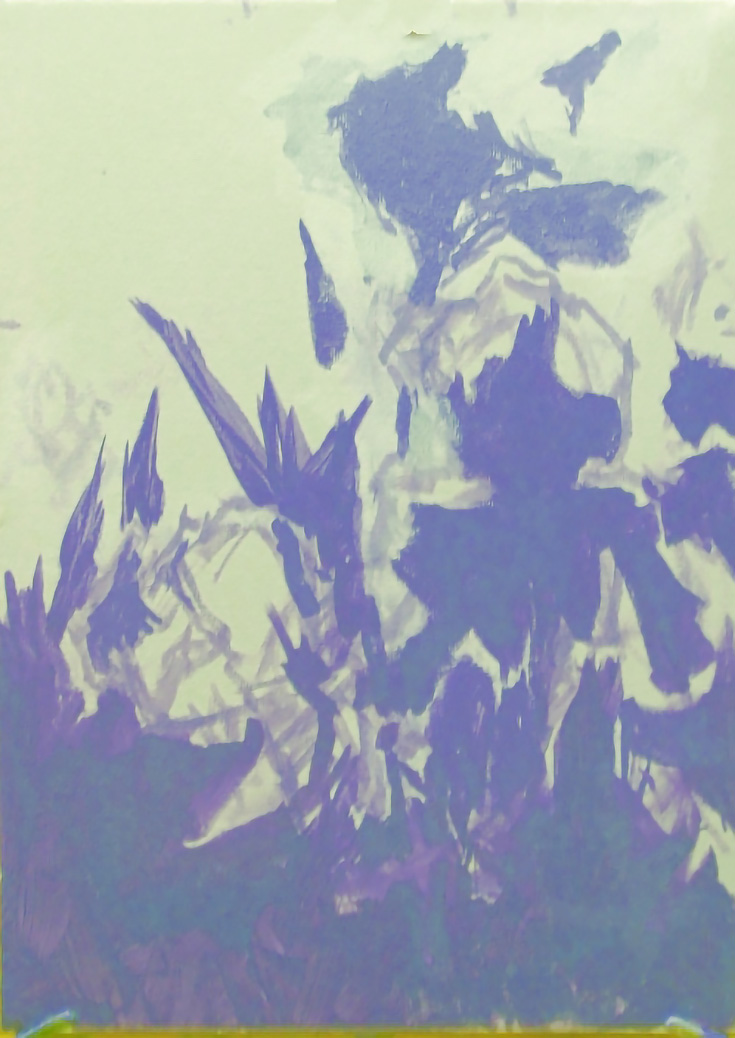
Fill in your Notan underpainting using a value 5 wash or opaque mixture. Traditional Notan drawings use darker values, but for this step of a Notan-anchored painting, a medium value works better. It’s dark enough so that you can discern a contrast between both lights and darks when painting over it, yet not so dark as to distract.
For this step, you may rely on your Notan drawing, work directly from the subject, or look back and forth between the two. It’s your choice.
Here’s my Notan underpainting made in acrylic. (The painting will be done in oils.) You’ll see that I decided to delete the building and use the lit grass as the background.
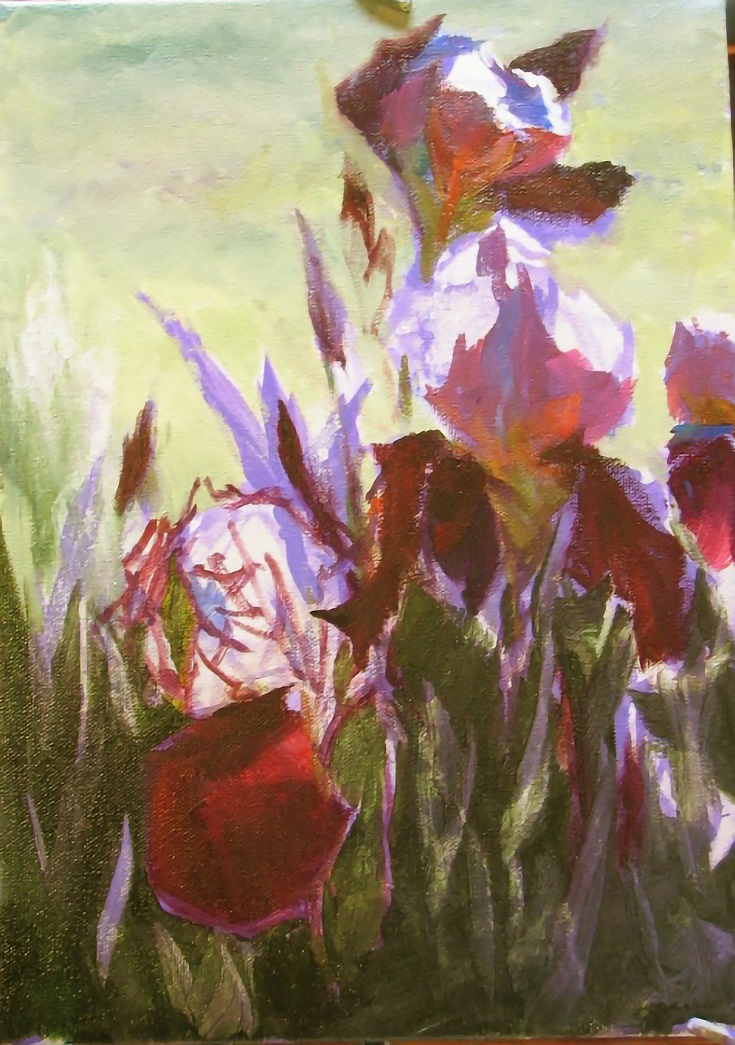
Step 5: Block in all colors found in the dark
Back to the comfort zone—somewhat. Looking at your subject, block in all the colors that you see which appear within the dark areas of your Notan underpainting.
In other words, paint just the colors you see in the shadows, avoiding using any color lighter than a value of 6. Rely on your value scale for judging this. Here’s my dark block-in of the irises.
Step 6: Block in all colors found in the light
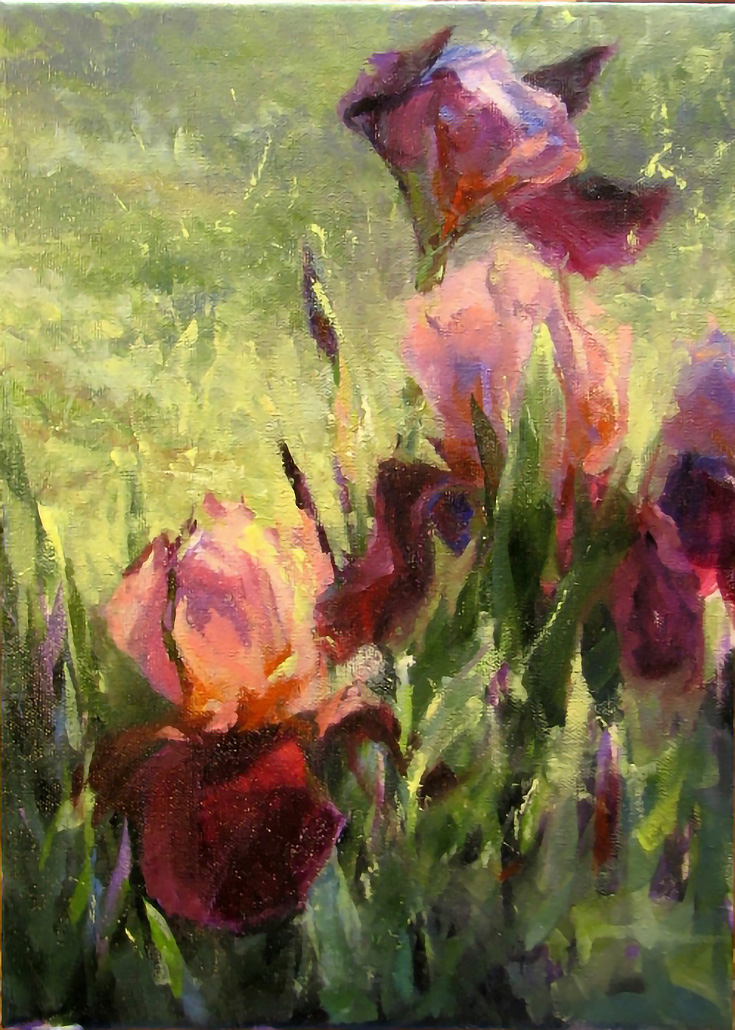
Now, switch your attention to areas where the light is either striking or illuminating your scene. Study the colors in those areas and, using what you see, finish blocking in color for the rest of your painting. Avoid using any color darker than a value of 5.
Step 7: Finish the painting
Up until this point your Notan underpainting has provided a map of shadow and light within which you built your major value and color ranges.
Now you can use your normal methods of painting to finish the piece—add final details, highlights, adjust colors, etc. The finished product should feel unified and compositionally sound, due to the influence of your Notan underpainting.
I hope you’ve all enjoyed my Notan tutorials—in next week’s tutorial I’ll discuss using edges as a unifying compositional device in painting. See you then!

This post may contain affiliate links.