
Have you ever painted with coffee? Believe it or not, it’s a wonderful medium for monochromatic artwork, with a wide range of rich brown hues.
You can use both instant and regular coffee to paint with. Instant coffee is a great time-saver—all you have to do is dissolve some instant coffee in hot water. Change the coffee/water ratio to achieve a lighter or richer color. Darker hues will require less water than the lighter shades.
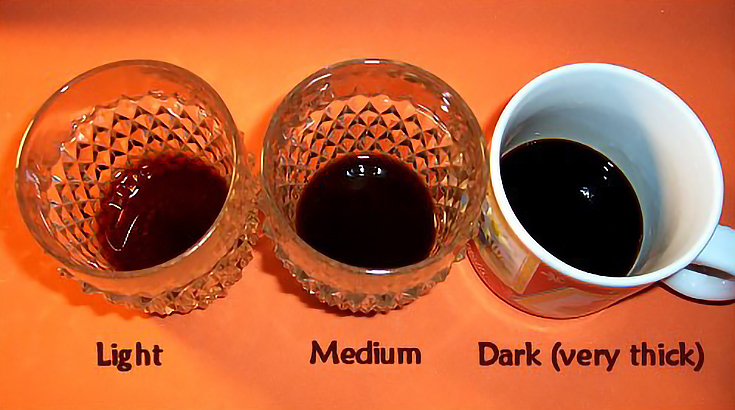
Regular coffee is even better if you’re like me and always have leftovers after brewing it in your coffee maker. I always pour mine into a clean pickle jar and keep it in the refrigerator until I’m ready to paint.
If your coffee turns out too light, boil some of it in a saucepan for a couple minutes until it thickens up and gets darker. Just like watercolors, you can always add water while painting to make lighter values.
Naturally, when painting with coffee you will also need paper (I use 140 lb. watercolor paper), paintbrushes, tissue for blotting up excess coffee, a pencil, and several small Dixie cups, or whatever you have on hand.
Painting with coffee
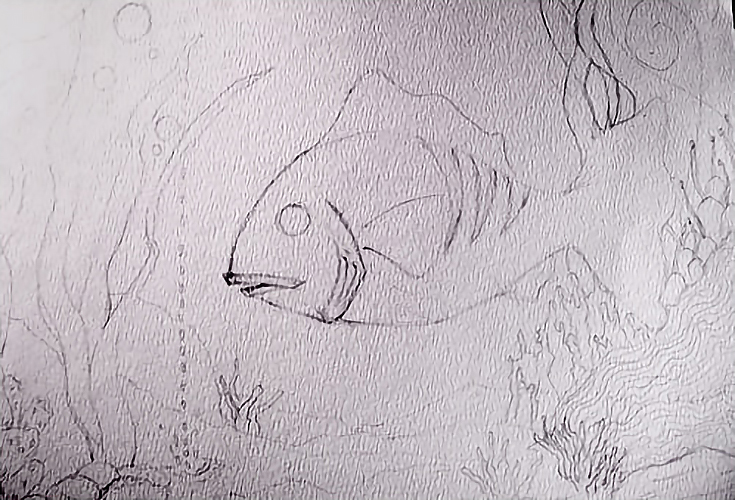
I usually begin by sketching my design lightly on the paper, just like a regular painting. Once the sketch is down, I can add the coffee.
Coffee lightens when it dries, so no matter how dark your thickest mixture is, you will probably want it to appear even darker on the paper. You will need to go over your paper quite a bit until you reach the desired appearance.
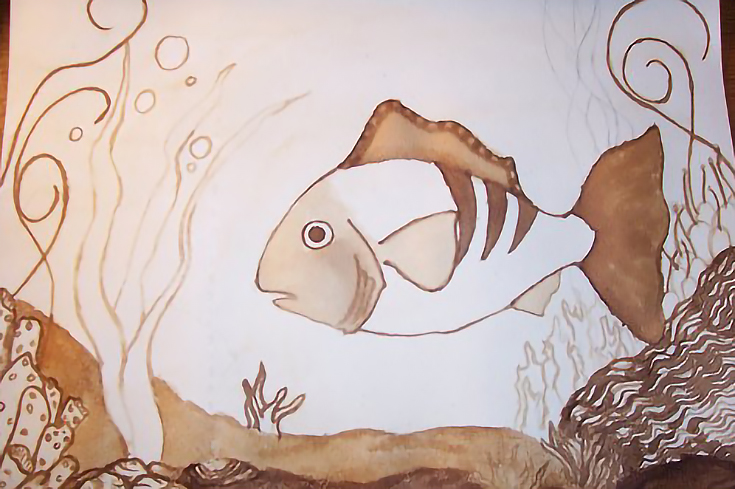
Wait until the previous layer is completely dry before adding the next. You can use a hair dryer to dry each layer and speed the process; it works beautifully.
If you don’t wait until it’s dry, you may find your coffee bleeding into the previous layer. This can wash away color and possibly ruin your painting.
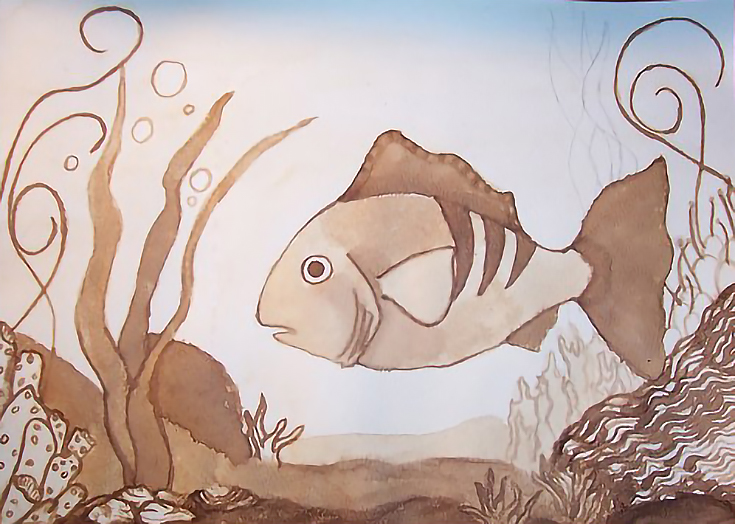
Continue layering it on and adding more details. This painting is not yet finished, but you can see the direction it’s headed. It just has a few more layers to go.
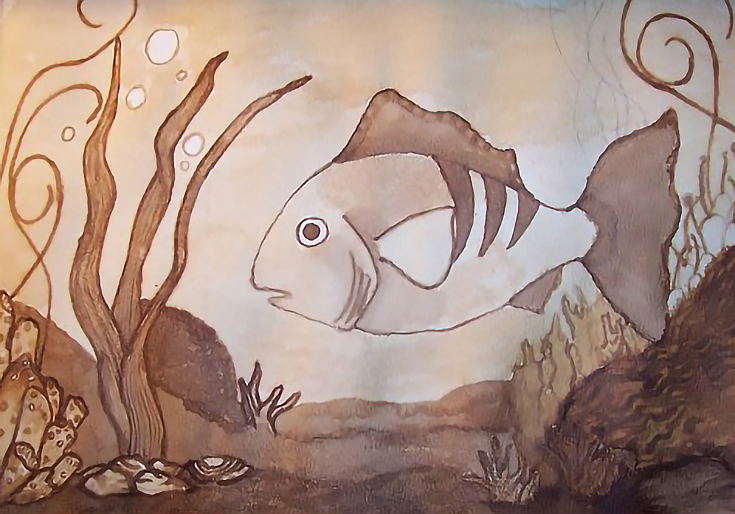
Try it out! And enjoy the cheap, yet rich, color of coffee in your art.

This post may contain affiliate links.