
Gourds are incredible natural canvases for art. Many cultures around the world have used decorative gourds in one form or another for hundreds of years. Some believe that gourds possess magical properties; others simply use them to make vessels, musical instruments, ceremonial masks, jewelry, or bowls.
A gourd has to be cured and cleaned before you can paint, carve, or decorate it. The curing process starts after the harvest and takes up to 12 months until the texture of the gourd is like wood—which makes them very versatile and resilient.
Once a gourd is completely cured, its outer shell has to be scrubbed clean before carving. In some cases, the gourd will be cut open, at which time the inside of the shell must also be cleaned, scraped, and sealed.
When working with gourds, there are a few pieces of safety equipment you should use to keep yourself and those around you safe:
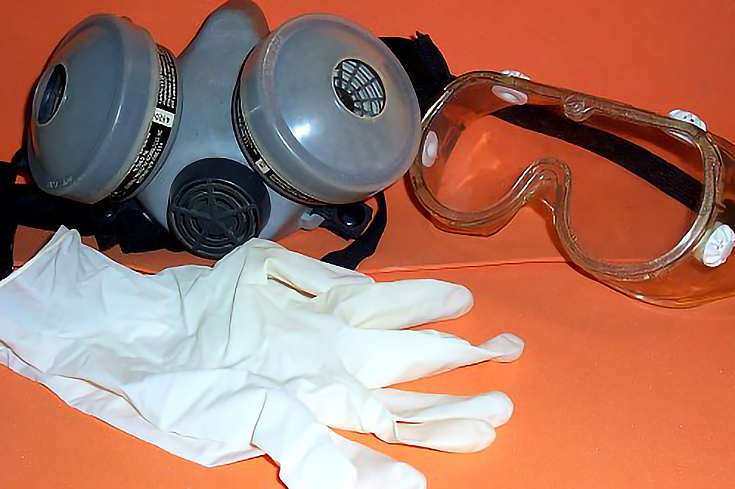
1. Mask or respirator
The number one concern when working with gourds is that you protect yourself from breathing in particles of gourd dust, which can contain harmful mold. If you do pyrography on gourds, you should also protect yourself from the smoke that occurs from burning your design into the shell.
Always wear your respirator or dust mask when you are cleaning the outside or inside surfaces, sanding, burning, or cutting the gourd shell.
Investing in a quality respirator is the best thing you can do. If you cannot afford a good respirator right away, a dust mask will help until you can get one. Breathing in dust or mold particles can be hazardous to your health down the road.
2. Safety glasses
Safety glasses are a must-have, too, especially if you are drilling, cutting, sanding, or carving a gourd.
3. Gloves
Always avoid direct skin contact with moldy gourds when you are cleaning or scraping them. Latex gloves can be purchased at your local drug store for this purpose.
Some people cannot even touch cleaned gourds without wearing gloves. If you are one of them, you may notice a metallic taste in your mouth, which is the first sign of this problem. Wear light-weight gloves while painting or decorating the gourd, and once the gourd is completed and sealed you will be able to handle it without gloves.
I should also mention that it’s best to work with gourds outside. If you must work inside, be sure to take the necessary precautions and use a good ventilation system.
Gourd dust particles and mold spores will cling to clothing and hair, so when you are finished working with your gourds for the day, take the necessary precautions and change your clothes, throw them in the washer, and wash up right away.
Take care to cover your hair, too—I wear my hair tucked up inside a baseball cap (as you can see, below).
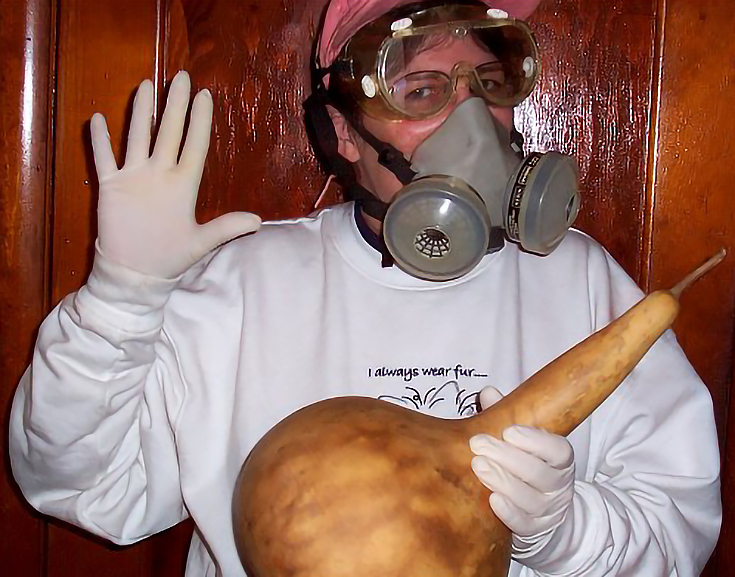
One final note: I speak from experience about not ditching the safety rules when it comes to gourds.
The first year I worked with gourds I became extremely ill because I did everything without my respirator on. I owned a professional respirator (which I used for airbrushing years ago) so I really had no excuse. I thought that I would be fine without it as long as I was outside, but I was wrong.
I ended up with a severe cough, very sore throat, constant sneezing, runny eyes. . . it was horrible. I also had experienced that strange, metallic taste in my mouth which I mentioned previously.
It took a long time before I began to feel better, but after that experience, I now put safety first every time.

This post may contain affiliate links.