
Swiss-made Caran d’Ache Neocolor II watercolor crayons are available in a wide variety of strong bright colors. . . 84 to be exact.
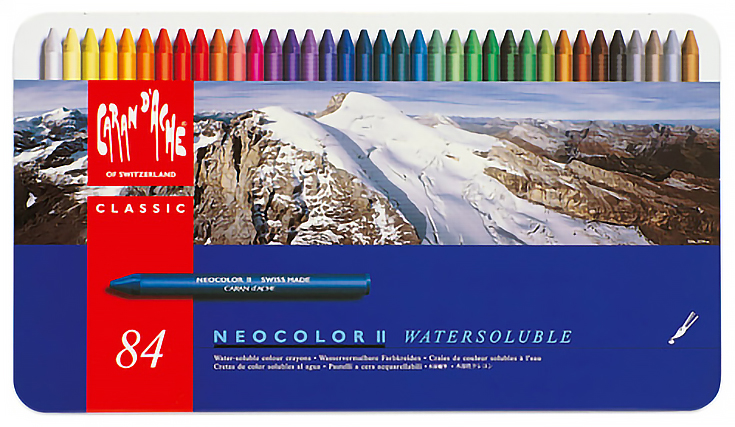
This combination of vibrant color and water-soluble media produces a watercolor crayon that is appropriate for professional use—such as watercolor painting—as well as for children’s artwork.
It was during my junior year at the University of Michigan School of Art, on a short break from painting studio to shop for paper, that I first happened upon this exciting new medium. Always the experimenter, I made a minimal selection of four individual crayon colors (red, blue, yellow and black) and sped back to the studio, eager to see what the watercolor crayons could do.
To my delight, I quickly discovered that they are equally adept at performing wet or dry, they are soft and easy to work, their application on paper can be very smooth, and they are lightfast.
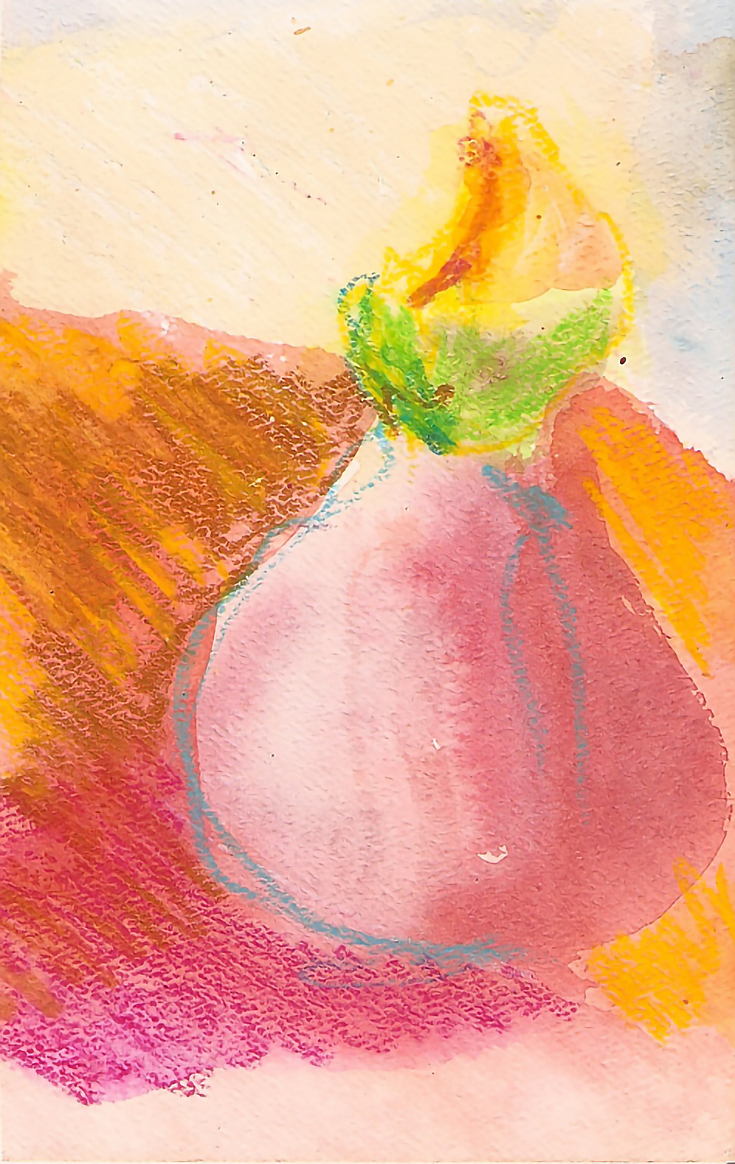
Caran d’Ache watercolor crayons also have an extremely long shelf life. I have had tins of 30 colors as well as individual crayons for more than 20 years now, and the intensity of the watercolor paint has not diminished due to age.
Because of their unique qualities, there are four different methods for using these watercolor crayons:
1. The crayons can be used dry, as a drawing medium.
2. After drawing, the artist can go back in with a wet brush to move the color about. Use a lot of water for a wash effect, or a drier brush for more opacity.
3. By dipping the crayon into water before drawing, the application of paint will be heavier—more of an impasto effect.
4. If you apply the crayon directly to the brush bristles and then paint with the brush, you can produce an effect similar to painting with watercolor tube paints.
Of course, several factors also render this watercolor paint perfect for children’s use. It washes off the skin without soap and with little effort, it is non-toxic, and should a spill occur, the spill will be primarily water, not paint, making clean up a simple task.
I’ve even used Caran d’Ache Neocolor II on several occasions for face painting (my children think it’s great fun!) and recently we took several of these brightly colored crayons to the beach—not only did we create and paint paper sailboats that we sailed until they nearly disintegrated, we also painted butterflies and flowers on our arms and legs and literally swam off the paint.
A wide selection of additional Caran d’Ache products is available, including Caran d’Ache Neocolor I, an oil-base crayon which I have found to be excellent for blocking in a canvas—and it is soluble in turpentine, too.
If your local art store doesn’t carry the Neocolor II, you can always order Caran d’Ache products at various online art supply stores, like Dick Blick or CheapJoes.com.
To read more from Carol Taylor, please visit CarolTaylorBlackandWhite.com.

This post may contain affiliate links.