
A few weeks ago I joined Adwords (Google’s advertising program) to learn for myself how cost-per-click advertising works. The following article is the first in a new series here on EmptyEasel about using Google’s Adwords program to advertise art online.
Today’s article will start at the very beginning of my Adwords journey: the sign-up process. Why? Because for some reason Google throws you right into the deep end when signing up for Adwords—they have you create your first ad as you sign up for the “Standard Edition” of Adwords.
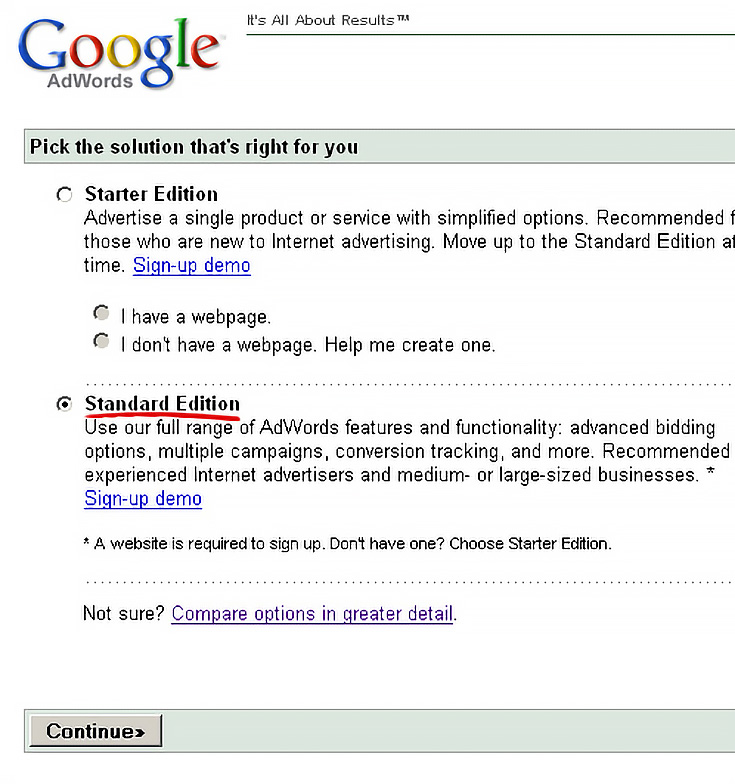
There IS a “Starter Edition” which apparently is just a one-page sign-up form, but I’d recommend going all the way the first time because one of the drawbacks of the Starter Edition is that you can only advertise one product—for artists, I definitely see us needing to advertise multiple works of art, multiple series, etc.
Once I clicked on Standard Edition, Google then had me choose my customers’ language and their location.
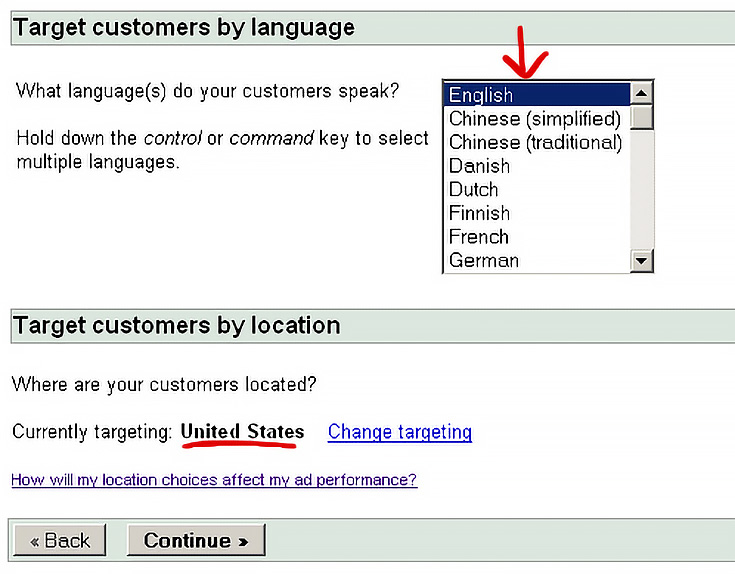
You’ll probably want to advertise your art in your own country (and certainly your own language), as well as any other countries that you’re willing to ship your art to.
Since the ad I’m creating today is for EmptyEasel, and EE is entirely written in English, I only need to target English speakers. Right now I’m sticking withe the US, but once I learn a bit more about Adwords, I’m sure I’ll add countries like the UK, Australia, Canada, etc.
After you target your ad’s location, it’s time to WRITE the ad. You’ve seen Google ads before—they’re made up of a simple link at the top of the ad (the headline), one or two lines of descriptive text, and a website address at the bottom. You’ll need to fill out each of those fields for your first ad.
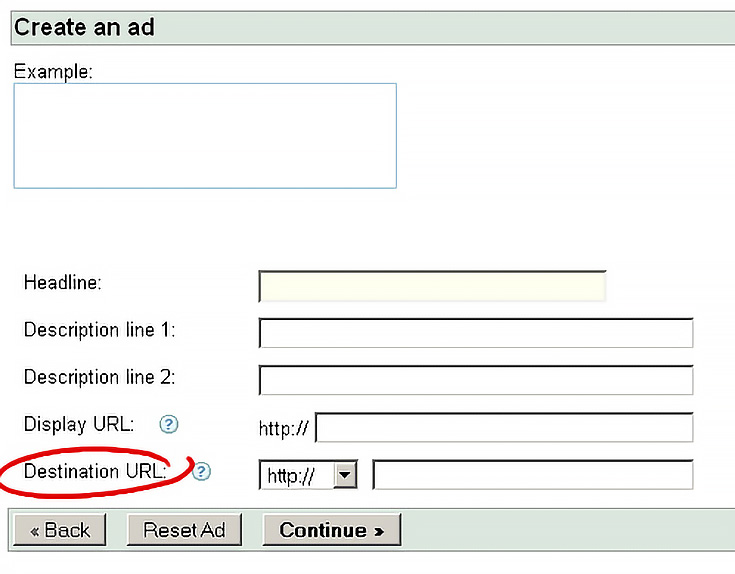
I circled the destination URL because it’s something you’ll want to think about—after all, that’s where people who click on your ad will end up at. If you’re selling a specific work of art, for instance, your home page might not be the best place to send visitors. And if it’s just an ad about you, maybe the “About Page” on your website is the appropriate destination.
You’ll also be limited to a set number of letters in your ad, so you really need to be concise with your wording. I tried out a few different ideas, and finally came up with this one.
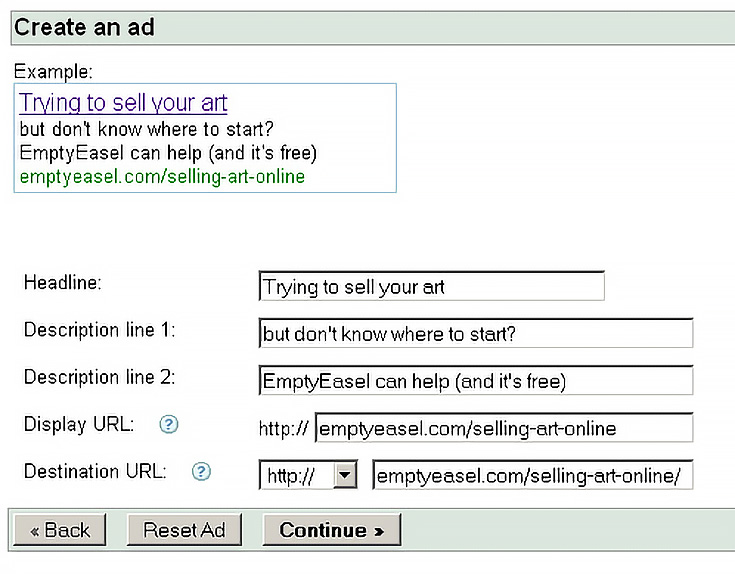
As you think of different things to say type them at the bottom of the screen and the ad will appear at the top, just like it’ll look when it’s live.
Then, once your ad is written, you’ll need to choose a set of keywords that you’d like to associate your ad with. Each time those keywords are searched for in Google, your ad will show up. Obviously this is an extremely important step—maybe even more important than writing the ad itself.
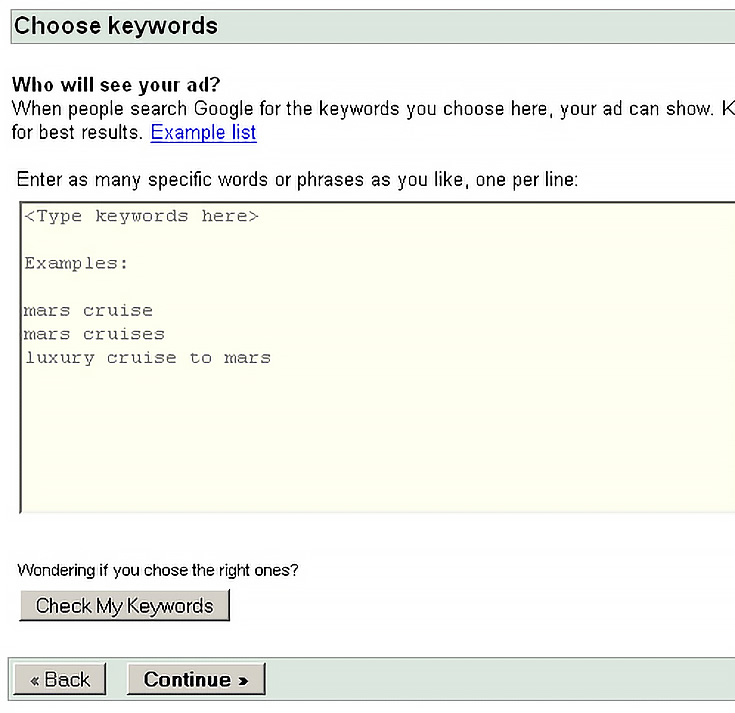
If you pick the wrong keywords (ones that don’t relate to your ad) then no one will ever want click through to your website. If you pick keywords that TONS of other advertisers are using, it’ll cost you a lot more to advertise.
I’m using the keywords you see below, but I won’t know how good of keywords those are until I see how my ads do over the next few weeks. For now, I just know they’re relevant to my ad.
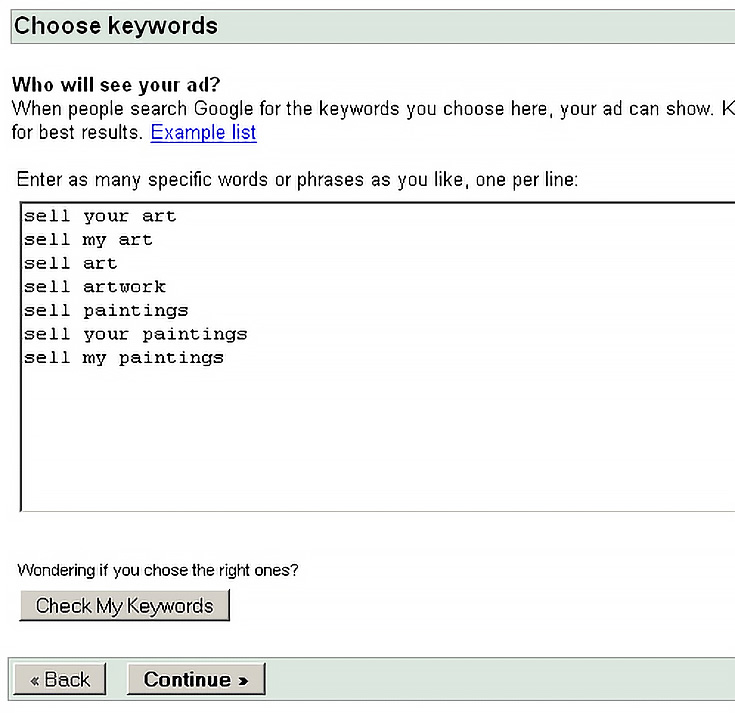
Once you finish selecting keywords (yours will obviously be different from mine) you’ll need to set up how much you’d like to pay for the ads.
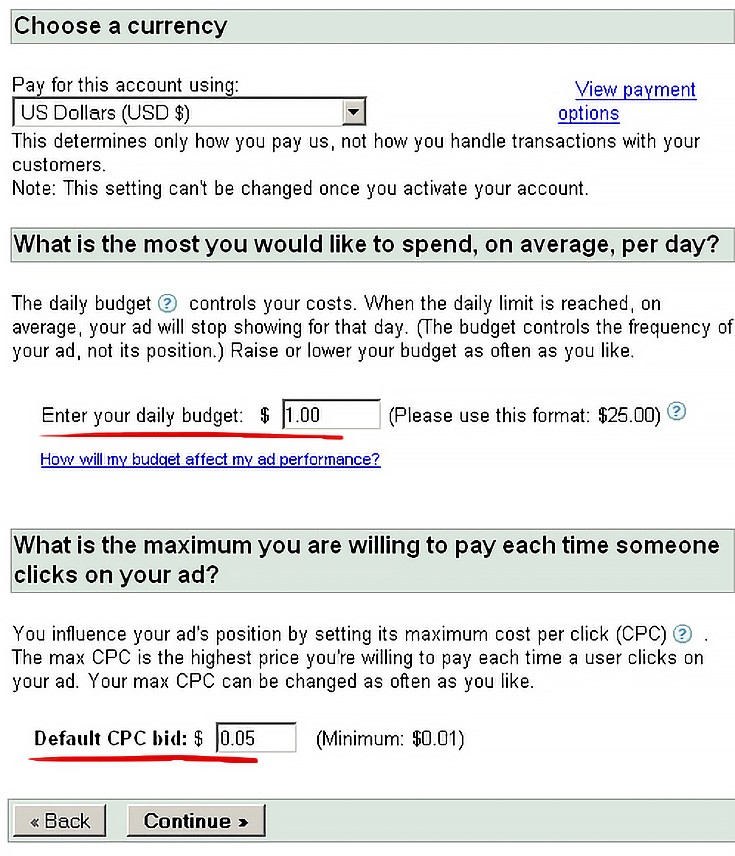
Google gives you two ways to control the amount you pay for ads: a daily budget (or limit), and a set cost per click. Since I’m just experimenting, I started out low—$1 each day with a max amount of 5 cents per click.
(You can also pause all spending in your Adwords control panel, so really, you’re always in control.) Here’s what the budget screen looks like.
Obviously the goal would be to get the most clicks for the least amount of money, but it all comes down to how popular your keywords are, and how many people are searching for those terms. I think this will be the most interesting part for me, because I’d really like to get a feel for how competitive the online art advertising market is.
Once you’re finished setting up your budget, Google will ask you to review your ad before completing the sign-up process. If everything looks OK, click continue. . .
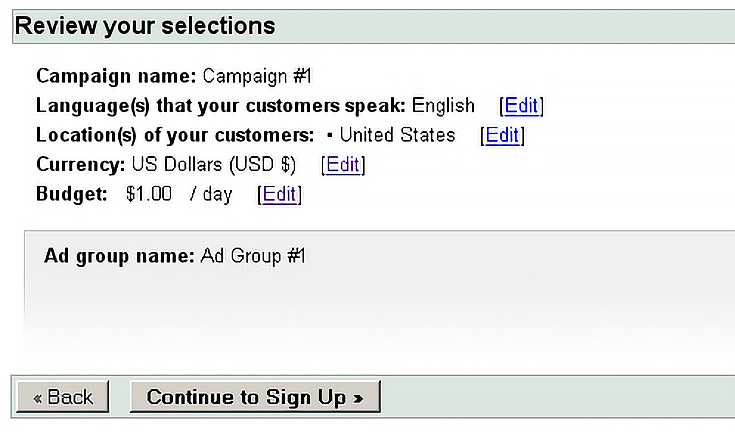
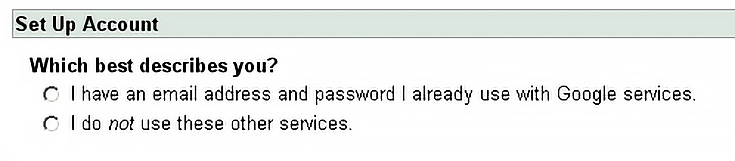
. . . and the next step just asks if you already have a Google account you’d like to use. If you don’t, they’ll give you one, and it’s pretty straightforward from there.
That’s it for the sign-up process—but we’ve barely scratched the surface of what Adwords can do. Stick around to see how my first few weeks of advertising went.
Have tips, success stories, or even failures you’d like to share about advertising your art through Adwords? Contact me and I’ll make sure to include your information into this series as well.
This post may contain affiliate links.