Art Question & Answer: How to Find your own Artistic Style

Published Mar. 14th 2007

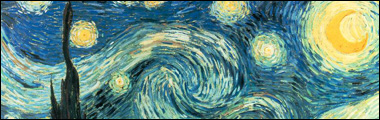
Starry Night by Van Gogh detail

Question: How do you find your own style, without adopting the style of your teachers? -Karrie

The question of style is an interesting one, Karrie, because most of the time an artist’s style is really just the defects, faults, or quirks that come with his or her personality and skill level.

Many people would also lump “style” in with “subject matter.” They’d consider Thomas Kinkade’s style to have something to do with houses. But of course that’s not the case. You can paint both dogs or houses in the same style, and lots of artists do.

When you study under someone, you’ll probably paint using the same process as they do, with the same brushes or sizes of canvas—even the same color palettes. So yes, it’s easy to pick up your teacher’s “style.”

But the way around this is to look for the unique aspects in your own art—and at first it will definitely be the flaws, or the things you think aren’t quite right. Maybe your perspective is a little strange, or you tend to create extra dark shadows. . . anything.

Then think about whether you’d like to emphasize that aspect of your work, or eliminate it.

As you grow more familiar with painting in general, you’ll see additional character traits in your own art and can weed out what you dislike while emphasizing the things that you find interesting.

I’d also suggest studying up on art history, since you’ll probably find certain methods of painting, color combinations, etc, from artists in the past that you’ll want to gravitate towards.

Your artistic style will constantly evolve, and of course there’s no right or wrong style to have.

As long as you understand your own work, and expand upon the things that make you unique, you’ll be ahead of the game.

Did you like this article?
Please stumble it so others will find it or check out the related posts below.
Finally, my "big project" is finished! It’s been a crazy day with a lot going on, but foliotwist.com is finally live and online! Since I’ve kept it a complete secret up until launch, here’s a quick (mostly visual) overview of what it does. . .read more
Question: When you're ready to sell your art, what's the best way to start? Who do you contact; and where do you go? -Karrie Another good question Karrie. There are two markets for art: One market is made up of art collectors and the other is just regular, everyday people. If you’re serious ab. . . read more
Today's poll is an interesting one for me because I honestly didn't think about what the results would be like. I just was curious to know what had helped others improve at art the most, and then I listed several things that I knew had helped me. But looking at the answers so far it's almost l. . . read more
It's easy to get stuck in a rut, both in life and in art. Even worse, sometimes it takes a while to realize that you're just going through the motions. Take painting, for example. If you've been painting for a while, there's probably a certain motif, or genre, that you paint in: landscapes, po. . . read more
Painting is a multi-faceted endeavor. . . it takes knowledge of values, edges, perspective—and of course, color. After all, color is what we use as painters to create the illusion of all of these other elements. Studying color, then, is an essential aspect of painting. All my painting li. . . read more
Stay current.
Subscribe to EmptyEasel's free weekly newsletter for artists. Sign up today!
EE Writers
Lisa Orgler Luke Montgomery Gordie Carver Stede Barber Doris Glovier Rose Welty Robert Sloan

Want to be a writer for EmptyEasel? Paid positions are available, and the perks are great. :) Contact us to apply