
 Pablo Picasso—born Pablo Diego José Francisco de Paula Juan Nepomuceno María de los Remedios Cipriano de la Santísima Trinidad Clito Ruiz y Picasso—is quite possibly the most famous artist that has ever lived, both during his own life and now decades after.
Not only was Picasso a tremendously prolific painter and a leading artist of the 20th century, he also co-created Cubism, an art movement that altered art history forever.
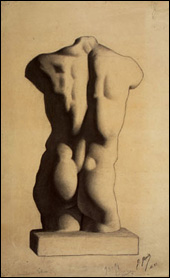
Born in 1881, Picasso was considered an artistic prodigy as a child. His father was an art professor, so he received instruction while very young—the above drawing of a sculpture was done in 1893 when he was twelve.
His classical training was finished early on, and before the age of 20 Picasso had already begun to shift his style away from traditional realism.
But Picasso didn’t immediately begin painting in that fragmented, Cubist style we all know him for; he had two distinct periods from 1901 to around 1906—his Blue Period and his Rose Period.
During his blue period, Picasso painted with primarily cold blues tinged with green, often depicting prostitutes or beggars.
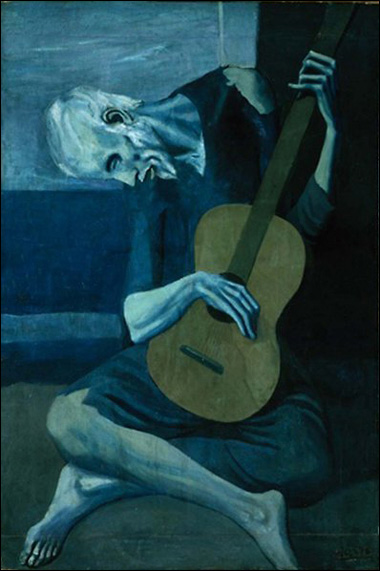
Picasso’s blue period ended when he began to introduce warmer colors into his paintings, especially pinks and soft reds.
A common motif throughout his rose period was clowns and circus performers. Picasso would often place these strangely somber figures in empty landscapes, as seen in this painting.
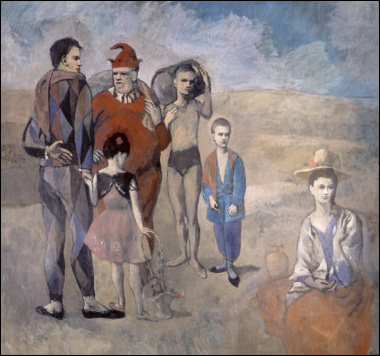
His rose period was shorter than the blue period that preceded it, and Picasso soon began experimenting with other painting styles.
By about 1910, Picasso had come up with something very new to the art world—Cubism. He wasn’t the sole creator of the cubist style; Georges Braque had as much, if not more, to do with Cubism than Picasso did. But after the creation of Guernica, Picasso’s most famous Cubist painting, the words Cubism and modern art began to make us think of him first and foremost.
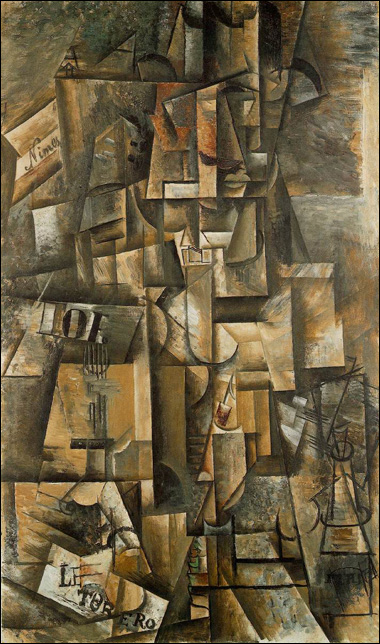
Picasso made these fractured, disjointed paintings by “analyzing” an object or scene from every angle, and then painting a single composition that combines each viewpoint. This early style of Cubism is actually called Analytic Cubism.
Picasso went on to make collage-style works too, cutting out paper shapes and combining them on canvas. It was a natural extension of his Cubist painting style, eventually leading to many sculptural works as well.
And unlike many artists, Picasso lived long enough to reap the rewards of his fame. His place in history was already assured by the 1920’s, and over the next fifty years as he continued to paint, sculpt, and create, his name truly became synonymous with modern art in the 20th century.
Pablo Picasso died at the age of 92 in 1973.

This post may contain affiliate links.