
A true lover of art and portraiture, San Francisco-based painter Akira Beard fully immerses himself into the creative world. Whether participating in exhibitions and art charities, or teaching art in his non-profit “Art With Elders” program and at his fine art anatomy class at the Academy of Art University, it’s obvious he lives for creating—and contributing to society.
“Like the art, itself, my professional practice stems from my ideas, beliefs and values,” Akira said. “Whenever possible, I have and continue to donate art toward such benefits and organizations as the SPCA, the coalition on homelessness in San Francisco, the Japanese Tsunami Relief fund, Oceanic Awareness Collaboration and other charitable causes.”
In his own portrait work, Akira’s recent medium of choice is watercolor on Yupo paper. Headpiece 17, seen below, is one example.
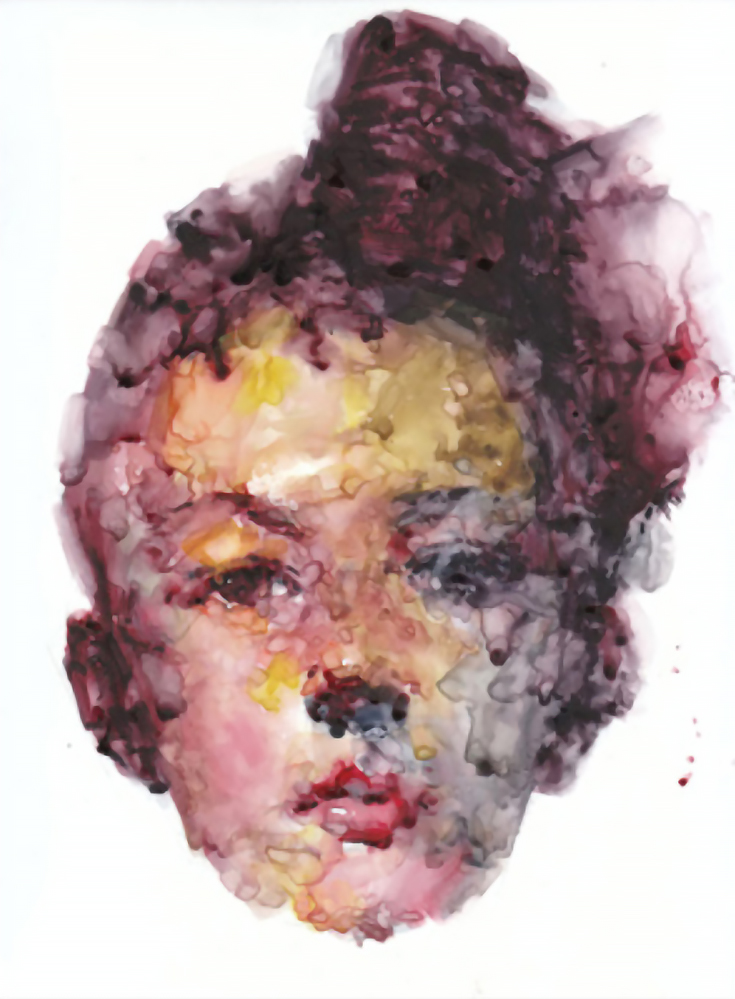
Akira’s wide array of colors denies identification of race or ethnicity, and instead focuses on the individual beauty that all people uniquely possess. Headpiece 17 includes feminine features softly concealed, distorted and blurred as soft colors delicately intertwine with one another—a composition perfectly suited to the Yupo paper and watercolor medium.
In his next portrait, entitled Kathe Kollwitz, Akira depicts the German painter, printmaker and sculptor staring ahead and lost deep in thought, her signature eyes filled with a seemingly hollow, heartbreaking sadness.
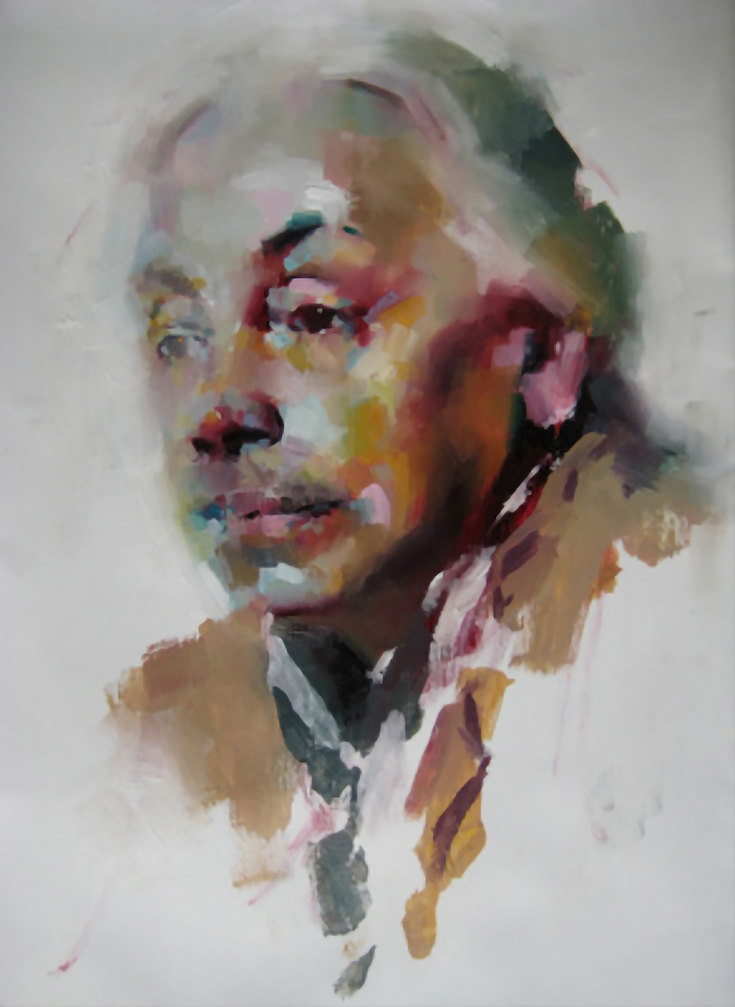
What I love most about this painting, which was created from water soluble oil paint on paper, is that it embodies the spirit of “less is more” in art.
Akira has succeeded in creating dimension and diversity in the short, directional strokes and bright bursts of blue, white and pink. The tip of Kathe’s nose, as well as her eyes, shine rather realistically, while the remaining structure of the painting is kept understated.
The way this piece was painted creates an interesting bridge between lifelike portrait and representational portrayal—a visual reminder that historical artists like Kathe are both real people and the visionary artists that we revere.
Finally, let’s end on Akira’s painting of Jimi Hendrix. . . and of course, one has to ask, what mediums didn’t Akira use? Watercolor, paint marker, graphite, pen and acrylic all make an appearance on the paper canvas, creating a surreal rendering of the iconic musician, titled simply, “Jimmy.”
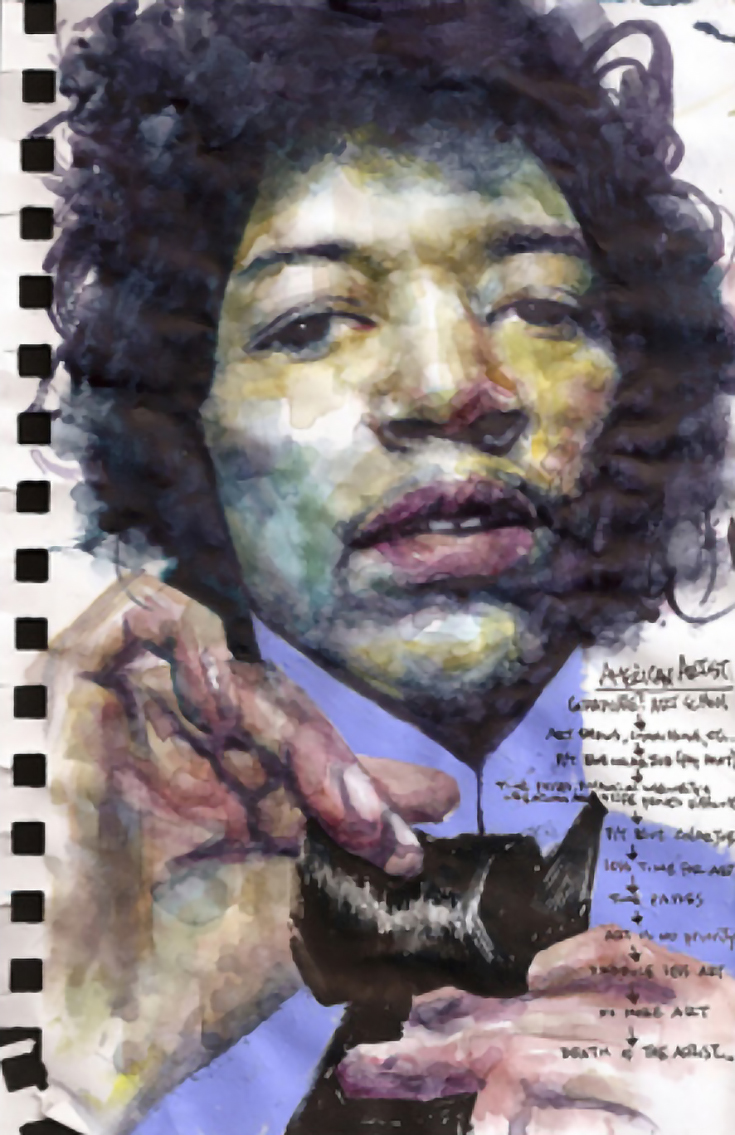
The blend of mediums creates a strong three-dimensionality to the piece, as do Jimi’s hands, which seem to pop from the paper as he folds his tie.
The solid, matted blue of his shirt contrasts with the translucency of his skin, which again contrasts with the silken, shiny nature of his tie and dark mass of uncontrollable hair. The combination of all these elements comes in a unique piece of art. . . as unique, you might say, as Jimi, himself!
Akira has many more equally compelling portraits on his website, all of which are definitely worth a look. I highly recommend going by today to take in the rest of his amazing paintings.

This post may contain affiliate links.