
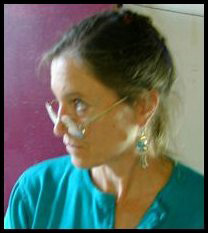
 Chris Carter loves to create art because it makes her feel “fabulous, balanced, and focused.” And in fact, she’s always created art, even as a child.
When she was just six or seven, she carved a series of shelves into a giant snow bank and then carved beautiful abstract shapes out of the ice chunks to fill the shelves. Today she focuses on a common thread in her art: movement through space.
Alyice: What’s your background in art?
Chris: At sixteen I studied privately with sculptor, Waylande Gregory. I also taught myself black and white photography using my mother’s kitchen as a darkroom after the sun went down.
At nineteen I attended a commercial art school for two years until I began studying painting with Adolf Konrad at which point I turned from commercial art to fine art. I moved to Boston and attended Massachusetts College of Art majoring in painting while also acting as an apprentice for black and white photographer Eileen Toumanoff.
After graduation I traveled and worked as a freelance photographer as well as teaching watercolor, drawing and photography.
In the early 80‘s motherhood and life in general acted as a major distraction from my life as an artist, though I continued to draw and paint almost every day.
By the mid 90‘s I returned to a more intensified daily practice.
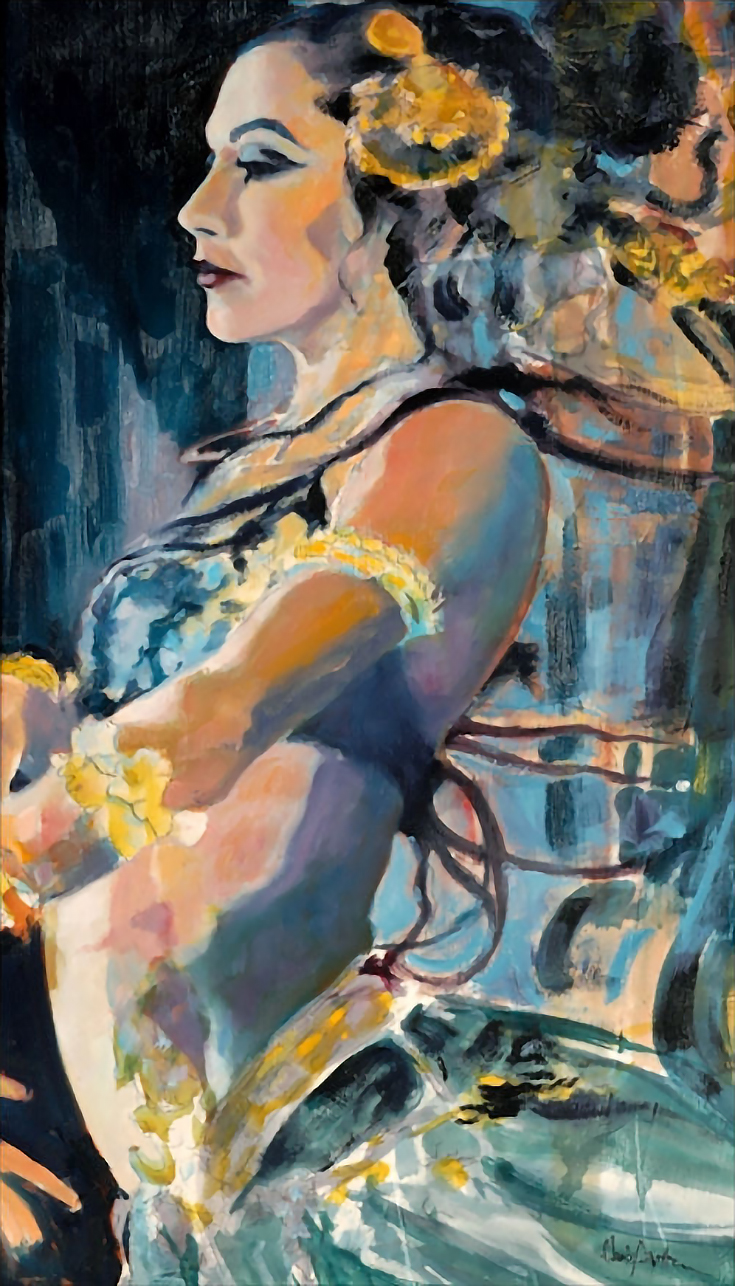
In 2004, I began painting figures moving to live music in bars and restaurants. That led to painting dancers during rehearsals and performances as well as painting during yoga classes. The yoga paintings led to fourteen, large paintings commissioned for the Bone and Joint Unit of the new St. Luke’s Hospital facility outside of Bethlehem, PA.
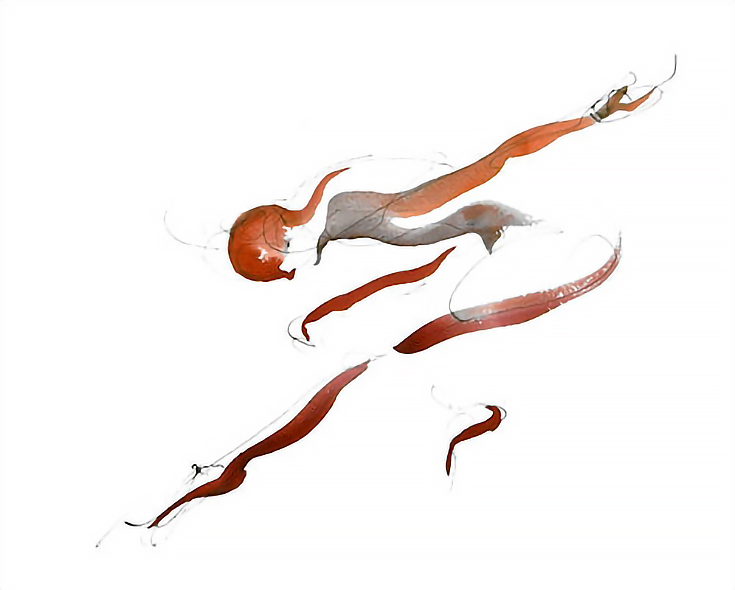
Alyice: How did you get started in creating your watercolor Yoga poses?
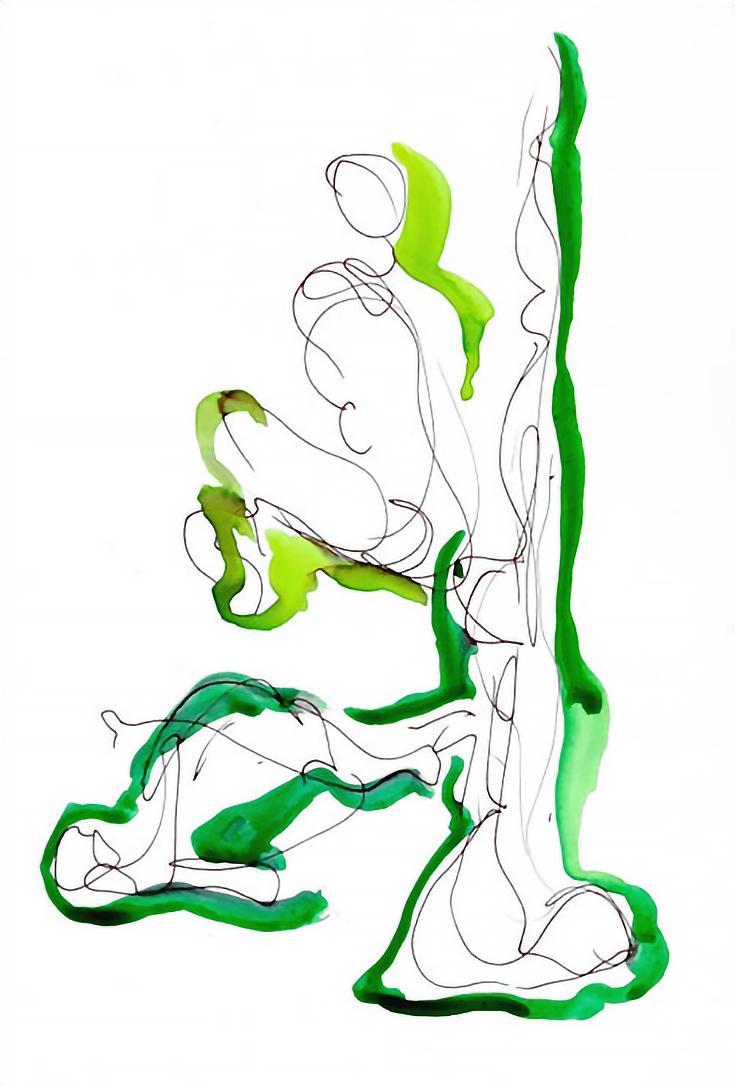
Chris: The owners of a local yoga studio, Easton Yoga, invited me to paint at one of their musical events. I began attending yoga classes. They permitted me to paint during classes. Fortunately, there was an elevated corner where I could sit to paint. It provided me with an excellent vantage point of the students during class.
Alyice: Why did you choose watercolor as your medium?
Chris: Watercolor is portable, dries somewhat quickly and flows beautifully, capturing the essence of the movement.
Alyice: What is the most challenging part about working with watercolors? Why?
Chris: Every media is challenging. I suppose that mixing the right amount of water with the pigment to move well on the specific paper I am using is the most difficult aspect of watercolor painting.
The quality of the pigments and the quality of the paper are significant variables that can make my experience of painting either joyous or miserable.
Alyice: What is the best part about working with watercolors?
Chris: I love the spontaneity of watercolor, the unexpected blending or separating of pigment, the transparency of most of the hues and the ability to pour it, splatter it, glaze with it and use it with ink.
Alyice: What do you wish you knew about watercolors before you got started?
Chris: I’m glad I knew very little about the medium. I often hear people say that watercolors are too difficult or even impossible to work with, that they are unforgiving. That simply isn’t true.
When you permit watercolor to act like watercolor it’s incredibly fun. It is, for me, like dancing with paint. Had I heard of other people’s fears, I might have had hesitations; I might not have played as freely as I did.
Alyice: How durable are your finished pieces?
Chris: No painting should be hung in direct sunlight. Colors, even permanent colors, will fade over time. I matt my watercolor paintings using archival matts and archival supports such as foam core. They are framed under glass. For the best protection against UV light, museum quality glass should be used.
Alyice: What is your creative process like?
Chris: My process is different depending on whether I am working in my studio, en plein air, in a dark bar or traveling. It also depends on whether I am working on figurative, landscape, still life or abstract work.
In the studio, I rarely know where I’m headed when I begin a painting. I allow layers of color and shapes to evolve into figures or to remain abstract.
When painting en plein air I use the landscape as a seed of inspiration and reference for the effects of light. I try to expand upon the color and to step away from reality.
When painting dancing figures and musicians I generally begin with a swift ink drawing using a dip pen and follow with brushstrokes of watercolor.
Alyice: What do you believe is a key element in creating a good composition?
Chris: Strong, varied shapes and a good choice of grayscale value range.
Alyice: How do you come up with a profitable pricing structure for your watercolor pieces?
Chris: I price all of my larger work at gallery pricing. I am represented by galleries and I will not undercut the galleries who invest their time and energy in promoting my work.
The smaller pieces and the work I do live, such as the yoga art, dancers and live musicians, as well as the daily color exercises, I do not consider to be gallery works. These pieces I offer at extremely low prices online. I believe that original art enhances the experience of life and that it belongs in every home, in every building, workplace and school. Art is healing and should be made accessible to all.
You can learn more about Chris Carter or her art at www.chriscarterart.com.

This post may contain affiliate links.