
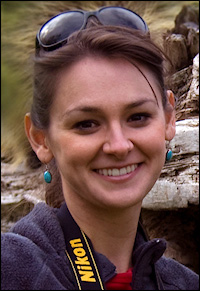
 Rebecca Latham first started painting in 1992 and since then has studied with notable artists such as Robert Bateman and Carl Brenders.
Shortly after her art career began, she got involved with the “Federal Jr. Duck Stamp” program, which raises environmental conservation awareness among youth. Through the donation of several of her art pieces, as well as reprint rights to those pieces, she has helped raise countless dollars for the organization.
In today’s interview we’ll be discussing her approach to art. . . from motivation, to materials, to composition, and much more.
Alyice: To begin with, how does creating art make you feel?
Rebecca: I usually get very focused and lost in the creating of a painting—losing track of time as I get into the flow of working. Starting a new work has a lot of excitement, is lifting and energizing. In a new piece, the directions that it can go are unlimited.

Alyice: Why did you choose watercolor as your medium?
Rebecca: I love the range of color that watercolors offer.
I am very appreciative of the massive range of hues that I now have available and of the ability to re-wet any color or custom mix I have made. It also comes in handy occasionally to be able to wipe off areas of a painting that can be improved and re-work them.
Alyice: What is the most challenging part about working with watercolors? Why?
Rebecca: Working watercolors in the method that I do requires a delicate touch, which can be a challenge. Too much, and the brush carves through the paint and exposes the surface board.
Alyice: What is the best part about working with watercolors?
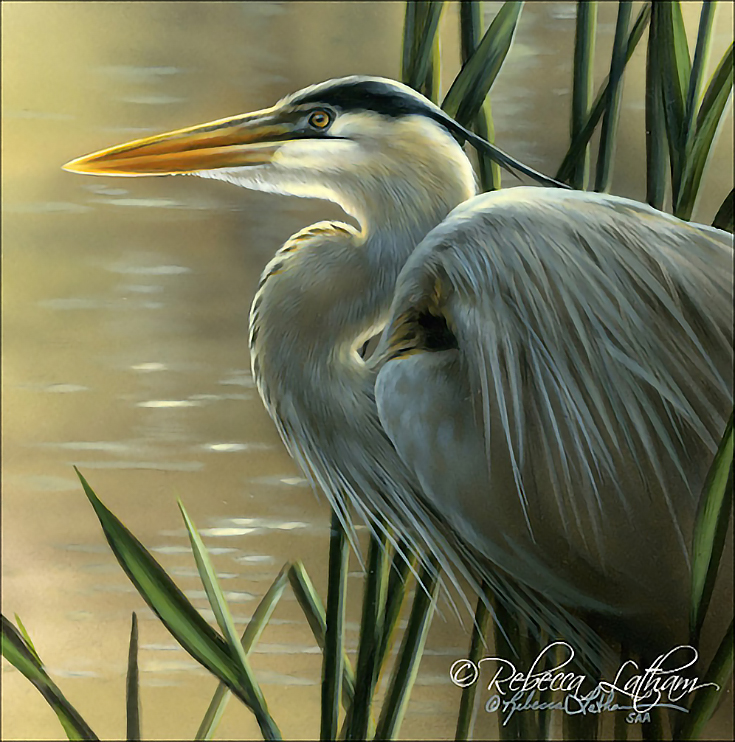
Rebecca: Other than the color range and ability to re-wet, I would say that the ease of blending and inner glow that can be achieved are my favorite aspects of the medium.
Alyice: What do you wish you knew about watercolors before you got started?
Rebecca: Working with watercolors has come naturally, actually. Other mediums that I worked with were far more difficult to handle and achieving the desired outcome was sometimes quite a challenge.
Alyice: How durable are your finished pieces?
Rebecca: I prefer to finish my work with a protective varnish layer that filters UV light rays that could otherwise damage the layers of color in the painting, giving the piece the protection of an acrylic or oil painting. If requested, I do occasionally finish them with the protection of a UV glass or plexi.
Alyice: You insist that beginning artists use professional quality paints, why is that?
Rebecca: In my experience, professional quality paints offer richer color and a higher quality pigment than a student grade paint.
Most often a student grade watercolor paint will contain fillers, which produces a duller or chalkier painting. Additionally, the color range offered is usually more limited.
The reason I suggest that beginning artists use professional quality watercolor paints is because, in situations where I have taught or critiqued, the biggest stumbling block for painters starting out has been their materials working against them.
I would suggest using Winsor & Newton Series sables and Winsor & Newton paints or equivalent. Since I began painting, I have slowly acquired an assortment of just about every professional brand available—all of which seem to come in handy at times.
For more info geared towards beginners, you may want to check out my article here.

Alyice: What is your creative process like?
Rebecca: I begin a painting by selecting the subject and environment that I want to portray in a new piece. If needed, I will go out and gather reference to use in the work—sometimes that is a handful of grass, stones and pebbles, moss, or numerous photographs to choose from.
Back in the studio, I will transfer a fairly detailed drawing of my design onto my board and begin a layer of sepia detailing over it. From that point it is layered in glazes of color and fine detail until the final look of depth, eye-leading direction in the piece, impact, and color glow are all satisfactory.
I sometimes have my mom or sister (both are accomplished artists) take a peek at a nearly completed work to give a fresh perspective on my progress.
Alyice: What do you believe is a key element in creating a good composition?
Rebecca: As the designer of a painting, you must lead the viewer through your painting with the balance of texture and color that remains interesting but is not overpowering.
Alyice: There are times when you can have up to 40 pieces of art being worked on at the same time, is it difficult to transition from one work of art to the next?
Rebecca: I do. I begin new paintings and work in flow through the greater portion of the painting. When I get to the point of fine-tuning a work, I prefer to set it aside to look at it with a fresh eye before reworking and finally completing the piece. Sometimes it is set aside several times.
For me, working one painting at a time slows my creative process dramatically. Hopping from one to the next is a bit of a challenge, but also offers a fresh viewpoint and something that I may have been working on in one piece often finds influence in another I have in my cabinet.
Alyice: You tend to concentrate on wildlife, what is it about wildlife that captures your attention?
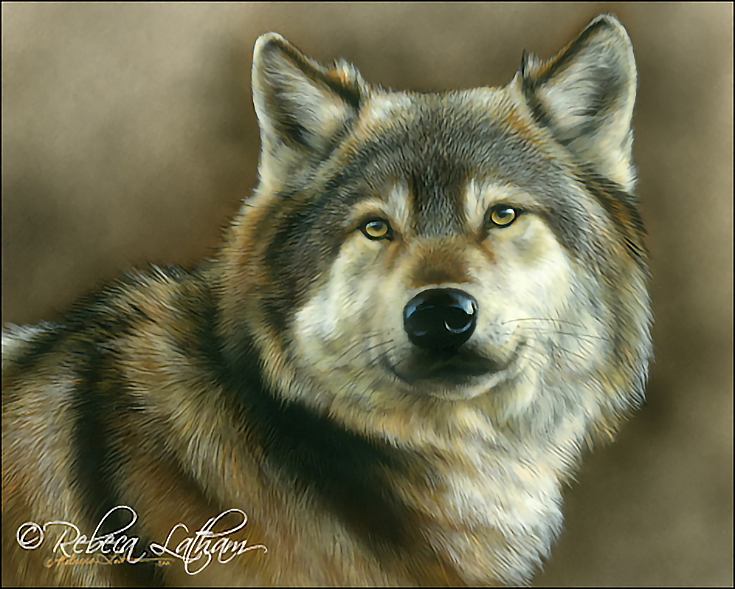
Rebecca: I think I am drawn to wildlife in part from growing up in Minnesota and being raised in an outdoors-focused family. There is a bit of a mystery to wildlife and our natural surroundings that is simultaneously intriguing and calming that I find very inspirational for my work.
I also work with numerous charities, non-profits, and conservation organizations. These organizations do so much to protect and restore what has been so important to me and my family. Giving back to these causes, that have provided so many rich experiences in my life, is very important to me.
You can purchase Rebecca’s artwork at www.lathamstudios.com or learn more about her process by visiting her blog.

This post may contain affiliate links.