
What is a linocut? A linocut is a type of relief print. Relief printing is when a piece of paper is “stamped” with ink from the top surface of the plate.
Other types of relief prints are woodcuts and engraving. Essentially, a linocut is the same as a woodcut but the plate isn’t wood, it’s a piece of linoleum, and because of the softness of the plate, it is easier to carve.
When you carve your lino you are cutting away the area that will be white and leaving the area that will be black (or coloured if you are printing in colour). Linocuts were originally made popular by Picasso, while before that they were simply regarded as a student’s medium to practise for woodcuts.
The linocut printing process
Almost every time you ever draw or write, you make a dark line on a light piece of paper, but when making a linocut you do the opposite of this. It can take some time to adjust to the fact that you are cutting light lines on a dark background.
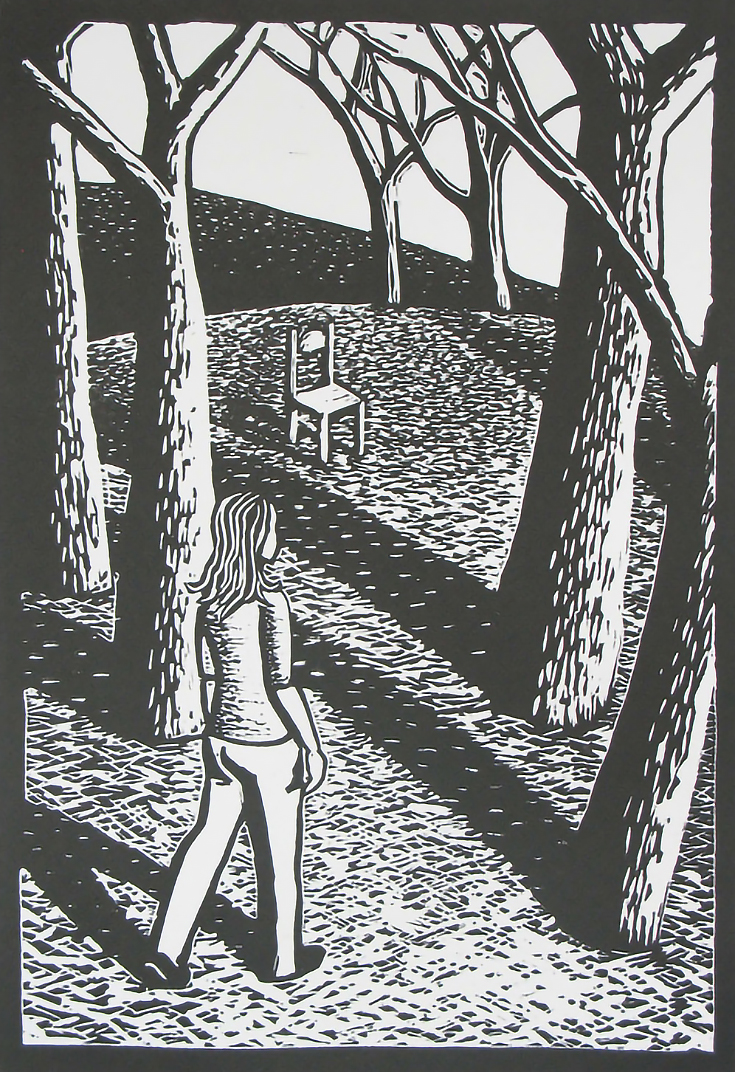
With a drawing, you can also shade tones of grey between black and white, but with a linocut there is no grey, there is only black and white. Pattern are sometimes used, however, to give the impression of a mid-tone.
Once your lino is cut, a block roller is used to cover it with block printing ink. (Acrylic paint will NOT work!) The linocut is printed from that block, by placing the paper on top of the block and either hand burnishing the back of the paper with a spoon, or sending it through a printing press.
Creating colour linocuts
There are at least 4 ways to make a linocut coloured:
Hand colouring – Hand coloured linocuts are created by hand-painting coloured ink or watercolour onto the black and white print.
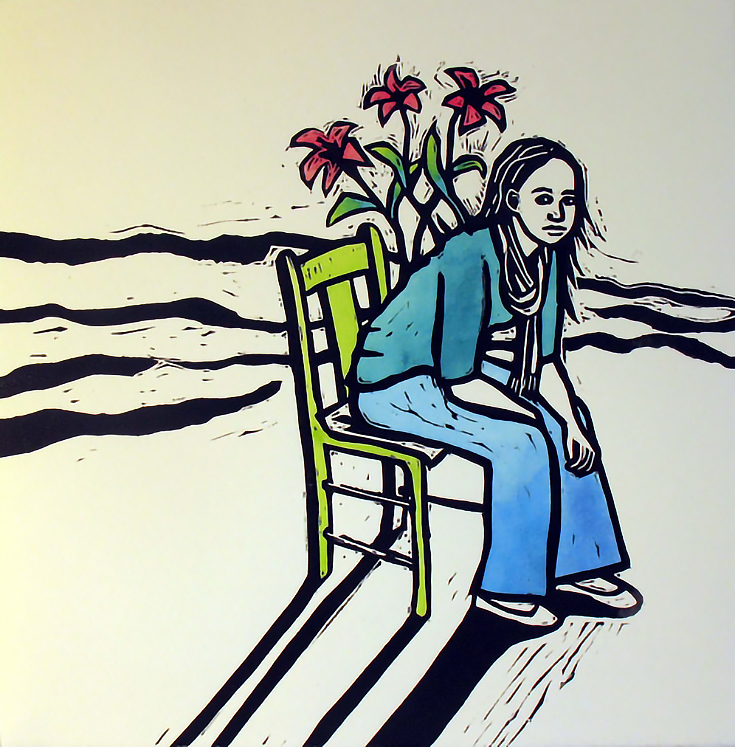
Colour reduction – With a colour reduction print, multiple colours are printed from the same block. The lino block is covered initially in the lightest colour, either uncut or with only a few cut lines, and printed on the paper. The block is then cut into again, and a second colour is used. (Which means that in some areas, the previously printed colour still shows up on the paper.) This process is repeated for each colour.
Multi-block printing – In this process each colour has a separate block and successive colours are overprinted on the same image, allowing for drying time in between.
Chin-colle’ – In this method, colored tissue paper is placed on the print before it is printed through the press. This leaves coloured paper where there originally would have been white areas.
Papers used in linocuts
Linocuts print the best on smooth absorbent papers. For this reason Japanese rice papers tend to print very well and these are the papers traditionally used in Japanese woodblock prints.
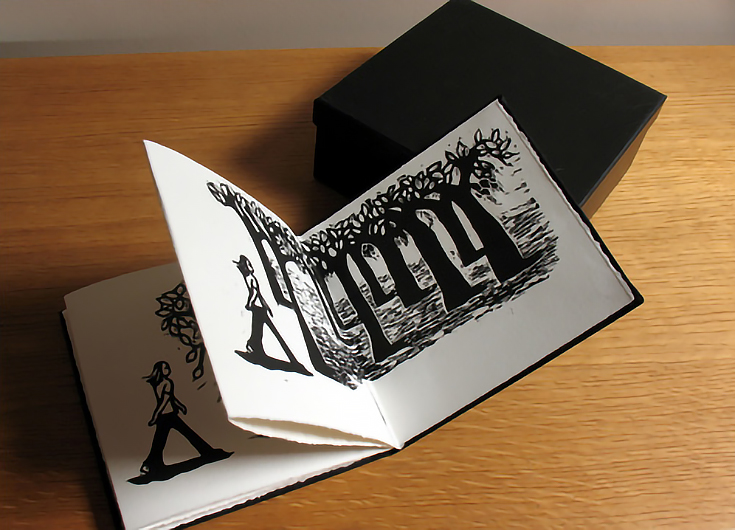
Smooth hand made mulberry paper is also good, and if printing with a press you can also use BFK or D’Aches 88. Smooth water-colour paper can also be used (like hot-pressed Saunders or D’Arches, or any other hot-pressed watercolour paper).
Purchasing a linocut
Buying limited edition linocut prints is a great way to start your art collection, and because there are more than one, they are generally less expensive than a painting by the same artist.
Look for the edition number in the bottom right hand corner. . . 4/20 means it is the fourth print out of a total of 20 prints. Traditionally prints are signed and editioned in lead pencil. This is because graphite is difficult to reproduce by photo-mechanical or digital processes, so it is difficult to make a forgery.
Finally, check that the artist has used archival papers (paper made from cotton instead of wood pulp). Japanese rice papers and mulbury leaf papers are also archival. These types of papers will last for a long time, much like a painting would.
To learn more about Shana James, please visit her website or Etsy page.

This post may contain affiliate links.