
When I first started painting, the genre I was least interested in was portraiture. My mother, who happens to be an artist also, was passionate about it and tried to encourage me to try it but frankly, I just didn’t get it. I was more interested in learning about floral, figurative, or landscape painting.
My love affair with painting portraits began a couple of years ago. After my daughter’s wedding, I began thinking about creating a painting that captured the absolute joy in her face on that special day.
After studying various techniques, I created a sketch and began a journey that resulted in countless hours of painting pleasure (and frustration) at my art table. Since then my technique has evolved, and as I look at the painting now I know what I would do differently. . . but it still remains one of my favorite painting experiences ever.
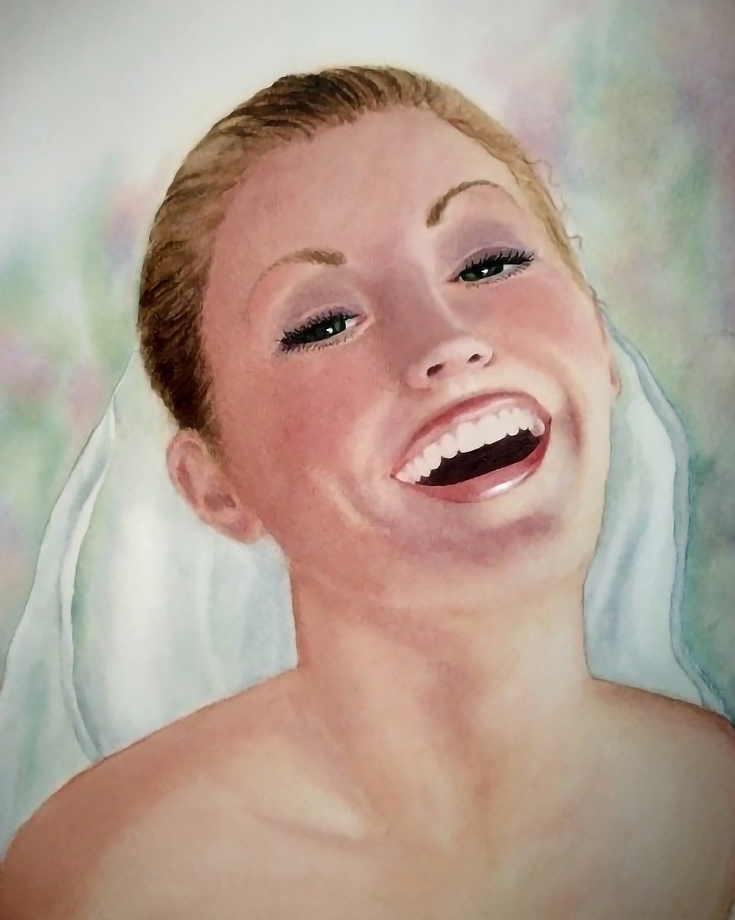
On the day that I painted this portrait, I had been working on it for several hours and I was frustrated. I leaned back in despair, rubbed my eyes, and thought about just scrapping the painting completely.
But then, when I looked back down at my paper, something changed. . . suddenly I could see my daughter looking back up at me! She had no hair, no ears and was missing much of the detail that would come later, but despite all that, I could see the undeniable likeness of my daughter smiling up at me from a 300lb cold press paper background.
This was a defining moment in my journey as a portrait artist. Suddenly, I got it! I realized that the joy of painting the face of someone you know and love is among the greatest art adventures one can experience.
If you have resisted portrait painting, I urge you to give it a try. However, I suggest that your first portrait be of someone that you do not know. That way you can learn and experiment without the added stress of getting the likeness just right.
Here is a brief walk-through of some of the steps that I took with this particular watercolor portrait:
1. Begin with a good drawing, and add some shadows.
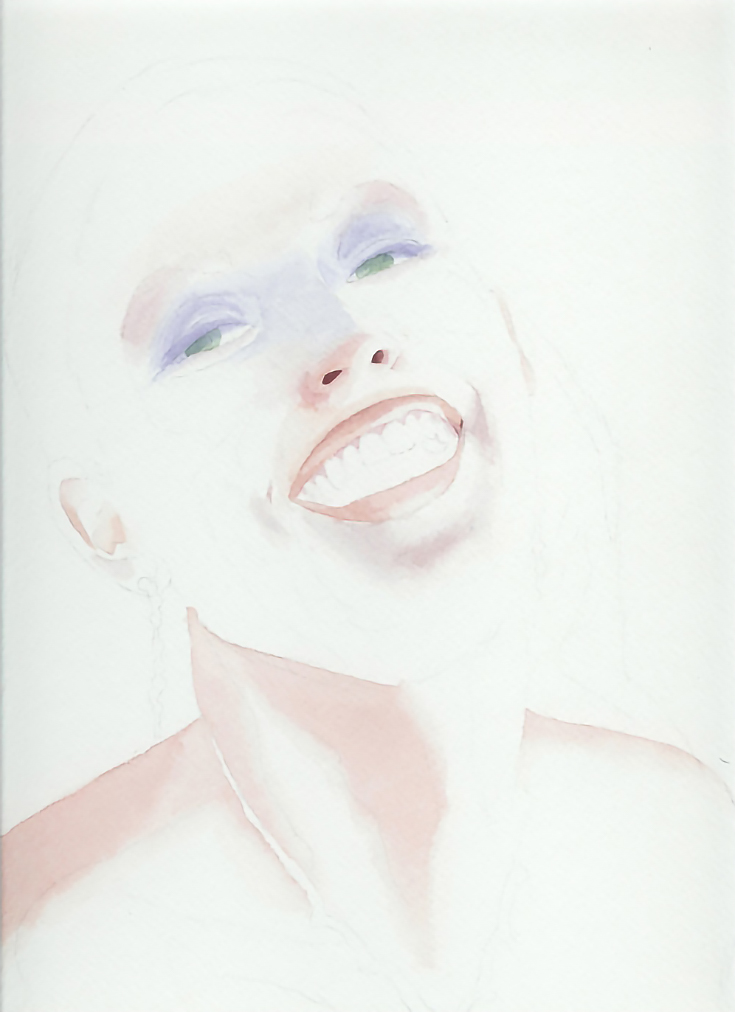
2. Complete the face with shadows and skin tones.
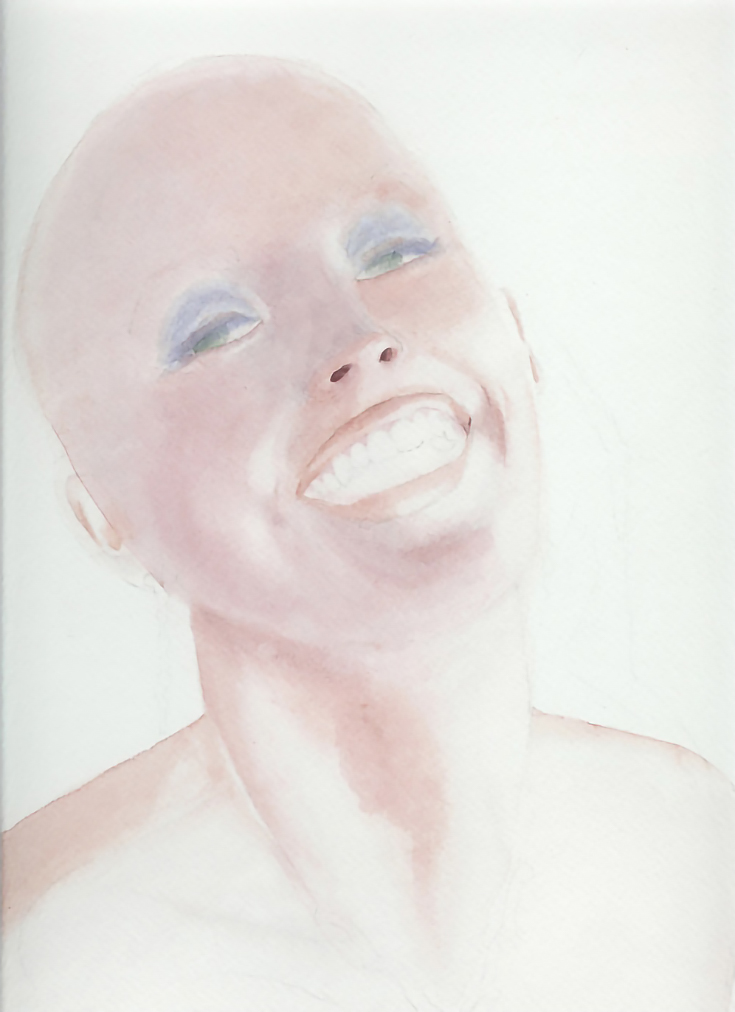
3. Add hair and final details.
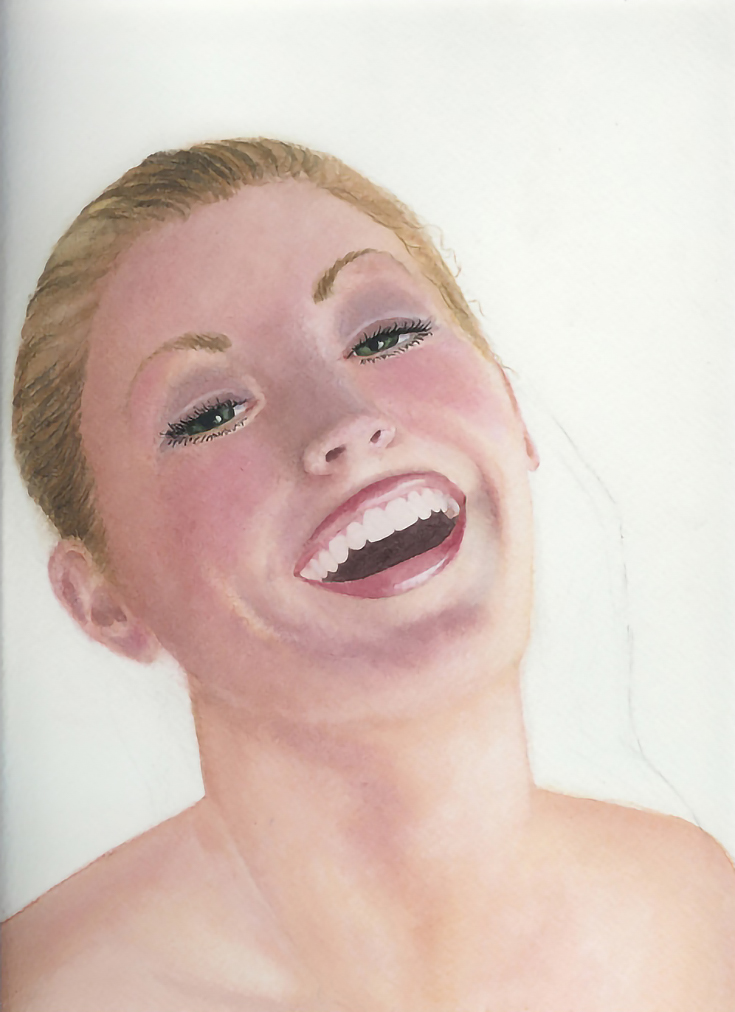
Obviously this is an abbreviated view of the process involved in this particular portrait. A full tutorial is for another day, and another painting.
Today I just hope you’ll start thinking about the portrait possibilities that you could have in your artistic future. If you’ve been holding back, DON’T. Portraiture may be outside your comfort zone, and it may take a lot of effort, but in the end, it’s worth it!

This post may contain affiliate links.