
Occasionally a painting needs something MORE to take it to the next level. The composition is ideal, the values may be correct, and yet the finished artwork just doesn’t sing. Often, this has to do with color intensity.
You see, when mixing paints, many watercolorists start with a modest puddle of water on the palette. After dipping our brush into the paint well, we swirl the pigment into the puddle of water. This may be done several times to create the desired intensity.
But there is another approach to color mixing. Have you ever watched any of the well-known watercolor artist/instructors mix their paints? They rarely start with a little puddle of water on the palette. Instead, they load the brush with clean water, go directly into the paint, then swirl the wet pigment on the palette to mix.
To create a larger amount of mixed paint, they do this several times. This process (which uses much less water) results in rich, intensely-colorful paintings.
How do these two methods compare, side-by-side?
Some time ago I painted a watercolor and ink sketch during one of my plein air workshops. It was not intended to be a masterpiece but a simple study for a future painting of my favorite river.
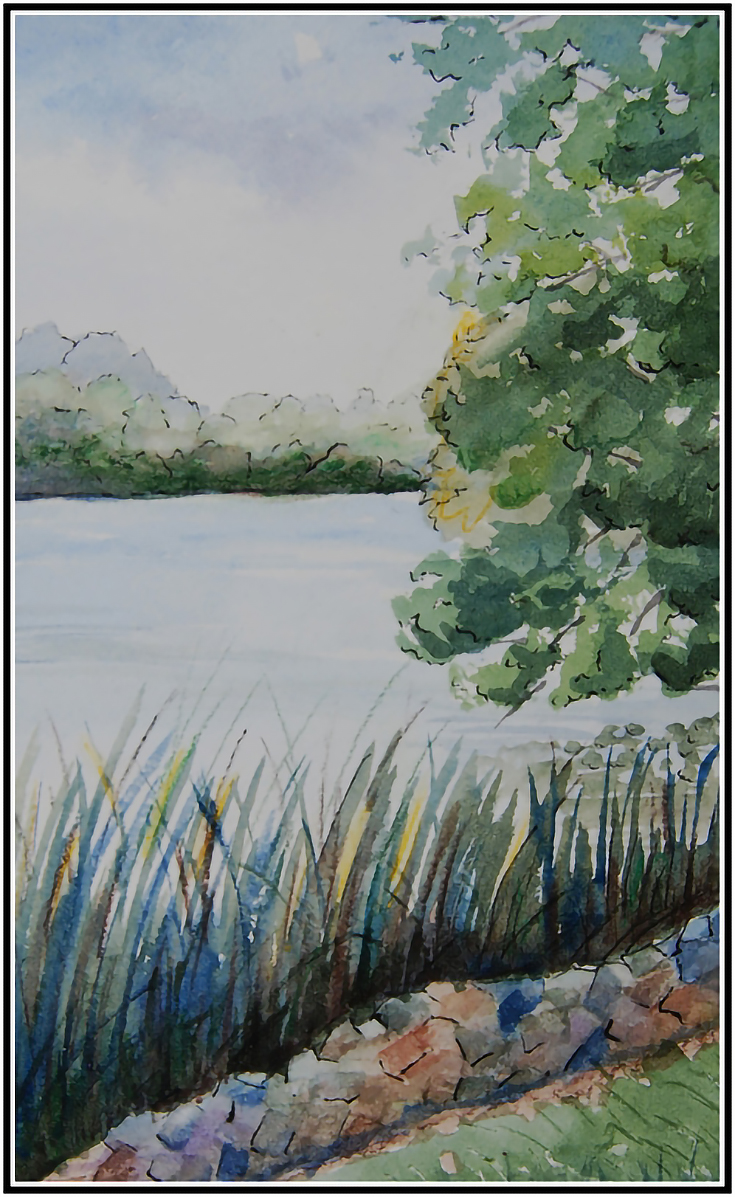
Since it was just a quick watercolor sketch, I used the traditional method of pre-mixing pigment into puddles of clear water on the palette. I had little time to paint, but I was please with my sketch and filed it away for reference for a future, full-sized painting.
When I sat down to write this article on intense watercolors, I realized that this plein air sketch would be an ideal way to compare a traditional “puddle-mixed” painting with the more intense mixing method I described earlier.
And so, I decided to paint the exact same scene again—I would use the same palette colors, but I would mix and apply the pigments more intensely on the new painting.
I made another drawing on the same size, weight and brand of paper. I prepped my paints by misting them with water as usual.
As I painted, I went directly to the well with my very wet brush, swiping it firmly across the damp pigment before swirling it into a mixture on my palette. I painted quickly, with little attention to detail, as I had done with the original plein air painting. I knew there would be a marked difference in intensity, but I had never actually reproduced a painting to demonstrate it!
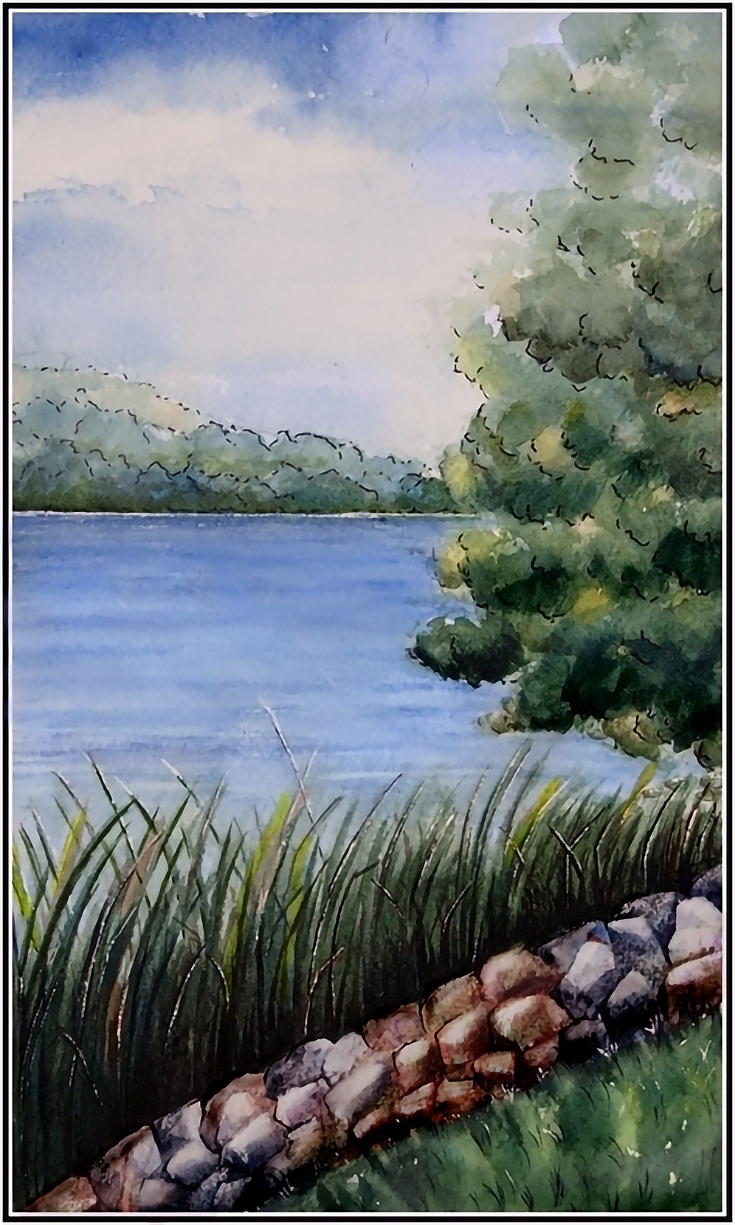
Can you see the difference that changing the mixing technique made? Making the (relatively) minor adjustment of using more intensely-mixed paint definitely adds significant visual interest, just because of the richly pigmented mixture alone.
Of course, mixing paints this strongly may not be appropriate for all paintings.
As the artist, you must judge when to use rich colors and when to dilute with water for softer watercolor hues—just don’t be afraid to add intensity when you need it!

This post may contain affiliate links.