
One common misconception about artists is that we are able to envision things perfectly in our imagination. People assume that we instinctively know what patterns and textures go together, or can come up with effective colour combinations off the top of our heads.
This may be true to some extent, but more often than not, artists are visual people and it’s essential for us to see in order to create things.
For example, I did a lot of sewing when I was in highschool. The hardest part of that process was choosing fabrics. I just couldn’t figure out what colours and patterns would go together. I relied mostly on my mom’s judgement for that, and it wasn’t until my project was complete that I could see that she had been right all along!
This is why many artists do thumbnail studies. It’s a way to see several different compositions before choosing the one that works best. Some artists even do colour studies to determine how different colours will relate to each other. How often have you gotten halfway through a painting and thought, “That yellow is the wrong yellow!”
But that’s not a bad thing. . . a major part of the artistic process is identifying and fixing problems, which is where today’s advice comes in:
If you think it, do it!
As artists, we can sometimes become so attached to a painting that it becomes precious to us. We are afraid to change it, limiting our creativity to the point that we avoid doing anything that might “ruin” the work.
Have you ever completed a piece and had a persistent thought in the back of your mind that something should be different?
Perhaps that an area should be darker or lighter. . . or that there should be a spot of blue in the corner? And no matter how many times you tell yourself the piece is done, that little thought just won’t go away?
I think we’ve all had those thoughts.
The question is: do you act on these urges? If you don’t, you could be missing out on something new and exciting.
When you get one of those urges to do something dramatically different, when you have a thought that just won’t leave you alone—act on it! Don’t worry about ruining your work. If you’ve done something once, you can do it again. It’s all about confidence!
If you’re thinking it, do it. Then, evaluate whether it works or not. Maybe it works and maybe it doesn’t, but at least now you know!
If you’re really and truly concerned about making a permanent mistake, consider using a more temporary method. . .
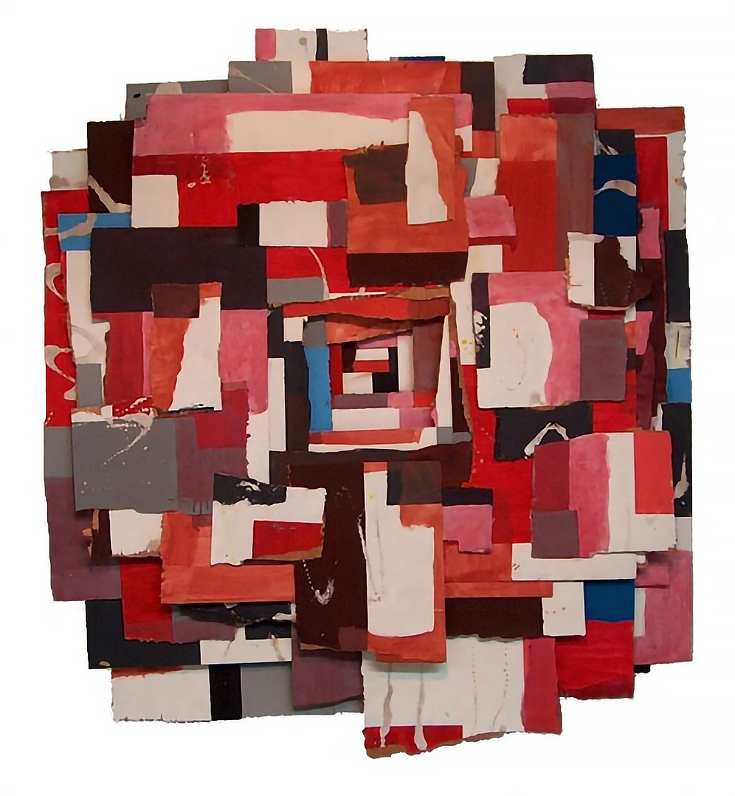
The painting above started out as all reds and pinks. I had an urge to add some bits of blue peeking through, but instead of adding blue directly, I painted it on some paper then taped it in different places on the painting. This allowed me to see the changes and determine where the blue would be most effective.
You could also use a program like Photoshop, or Corel Draw, or Gimp to see changes without affecting your finished piece.
The bottom line is this: don’t ignore those persistent ideas in the back of your mind. If you always do the same old, you’ll always do the same old! Art is about change and growth, so don’t hold yourself back. If you think it, do it!
For more articles by Miranda, please visit her art blog.

This post may contain affiliate links.