
For some, using a "disciplined approach" to create a visual image may seem like a conflict of nature. After all, the artist is suppose to be guided by inspiration and free-flowing thought, right? What value would a "disciplined approach" have in such an environment?
Contrary to that belief, I would argue that a disciplined approach is the basis for realizing (or creating) anything of value—including art.
In the words of Chuck Close: "Inspiration is for amateurs, the rest of us just show up and go to work."
Let me relate to you the process that I used to create art, specifically in regards to a project I just completed: the Flower Icarus Project.
My interest for the last several years has been fine art photography, particularly of florals within a reflective environment. My goal is to integrate light, color and shape to produce an exceptional, unique image.
For me, producing exceptional visual images has required the use of a disciplined approach encompassing four phases: Setup, Capture, Post-processing, and Printing.
Each phase takes effort, time and skill. In addition, over a period of multiple photo shoots, each phase has evolved and has been improved upon.
Phase 1 – Setup
Setup consists of structures used to support the floral arrangements. The setup is never seen by the viewer; it is invisible in the final image. Nevertheless, it is a significant factor in producing an exceptional image.
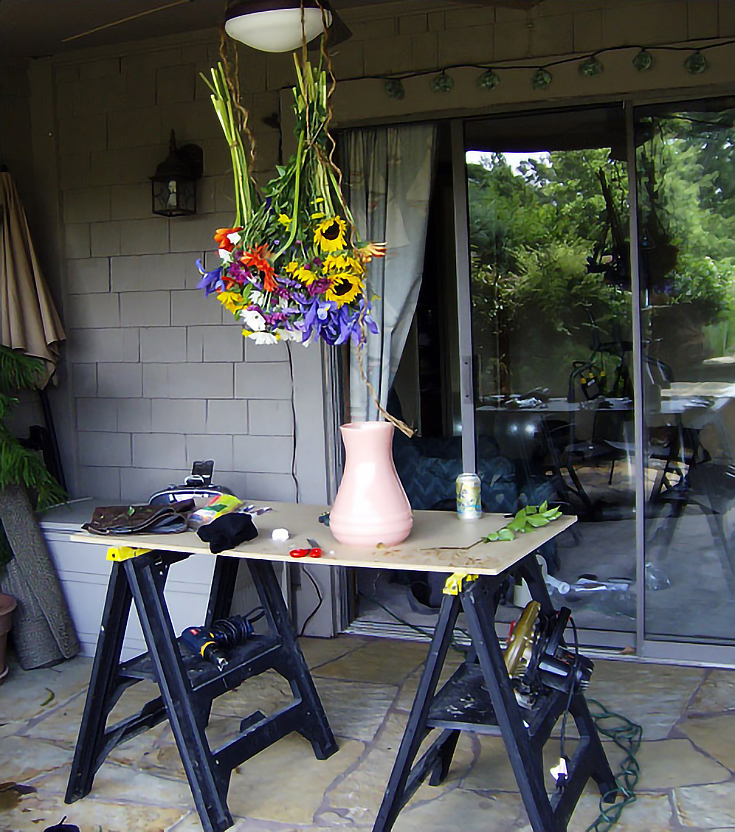
Each time I go though the setup process I make notes on how it can be improved on subsequent shoots. This continuous improvement of the setup has been a key factor in creating more interesting and successful visual images.
For the Flower Icarus Project, the setup included such things as a clear acrylic frame that I customized of the course of several years, a water setting, and more.
Phase 2 – Capture
For the Flower Icarus Project I used an SLR camera and a high quality lens. This system produced images that were richly saturated. In addition, I used a tripod and a remote control shutter release device in order to ensure sharp images.
From start to finish, the entire project required 10 separate photo shoots spread over a period of several months. After completing a shoot, I uploaded the images onto my computer and then culled the images, selecting those closest to my creative vision.
In the beginning, I was on a steep learning curve with respect to this Capture phase. However, recording what worked and what did not work during this phase allowed an acceleration of learning, which in turn, produced consistent results that met my standards.
Phase 3 – Post-processing
During the post-processing phase I used photo-editing software (Photoshop) for tone and color enhancement, noise reduction and sharpening. For me, the Photoshop learning curve was steep indeed. However, by taking notes of what post-processing steps worked and what ones did not work, I was able to progress through the learning curve quick enough to get quality images in a relatively short period of time.
Phase 4 – Printing
In order to produce an exceptional print I need to be closely engaged in the printing process, so I prefer to do my own printing. One problem often encountered is that the image seen on the computer screen will not necessarily match the printed image; the image looks wonderful on the screen but the printed image does not meet my expectations and adjustments are required.
In addition, there are technical printing issues such as calibration, color space and profiling that need to be actively managed to ensure that the image reflects proper colors. Again, in the beginning I had a lot to learn about printing. However, by methodically working through the printing steps over multiple occasions I was able to determine the best printing practices for my work.
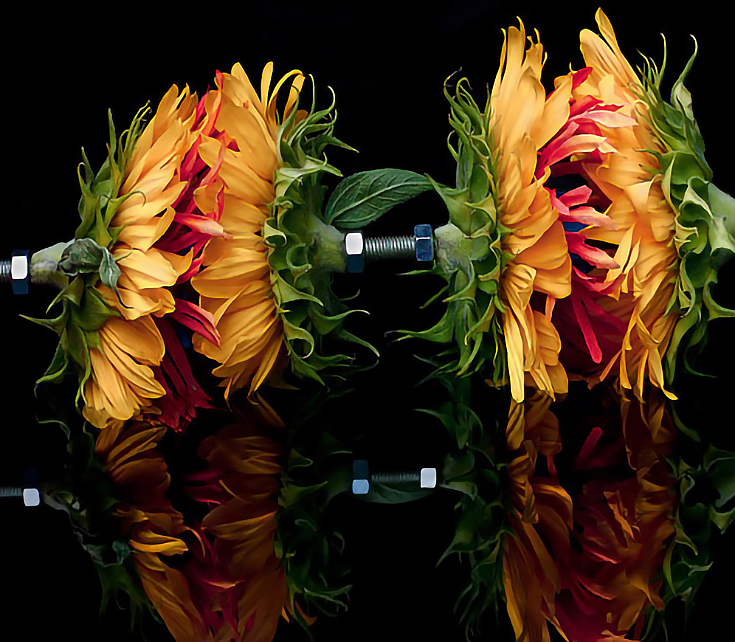
The 4 phases above encompassed my entire "disciplined approach." Notice that the attribute of "inspiration" was never mentioned once in this process and really has no relevance here. . . except to say that I’m always excited to be involved in a creative project, which, I guess is what makes me an artist.
Of course, there is a 5th phase that is arguably the most important to me as an artist: the Audience.
A work of art cannot be complete until it is viewed; it does not have ‘life’ until someone looks at it and experiences a compelling emotional or analytical response.
If the viewer has felt a response looking at my images then I can call this project a success. . . but the process of finding an audience is a whole other ‘disciplined approach’ story—and perhaps the subject of a future article.

This post may contain affiliate links.