
Since writing my last article for EmptyEasel on financial success in art, I have been deluged with comments and opinions about whether commercial art can be fine art (and vice versa) or whether those distinctions are even relevant.
This subject still remains of interest to me, particularly because it is primarily within our own profession that the controversy rages.
As I type this, an exhibition is going on in my home town that features the work of 5 graphic artists. A local writer wonders if this exhibition is “high art” and connects the work to that of the 1950’s pop art movement. But why wonder?
Let’s look at how “fine art” is defined
Throughout the course of history, art centers and art schools always brought forth the next era of artistic expression—they determined what was fine art by bringing it into the mainstream.
The limiting factor was speed of communication between various centers of artistic learning, so widespread acceptance of new movements took longer than it does now.
Today our world is bombarded with ideas and imagery at a much quicker rate than ever before, but with instantaneous communication (via the internet) it’s easier to keep up.
Now that society is digital, why isn’t digital art fine art?
In addition to globalizing knowledge over the web, computers routinely help us create visual concepts as well (and personal computers have been around for over three decades). So why are we still struggling with the idea of digital art as fine art?
In my opinion, the definition of “fine art” must evolve to encompass both the creativity and advanced ability of this generation. . . and it’s long overdue!
As evidence of that, I’d like to present the massurrealism movement, named by artist James Seehafer. Kind of a cross between pop art and surrealism, this “movement” plays off of mass media communications, finding its viewing audience in print, movies, music videos and yes, galleries.
Officially, massurrealism is listed as starting in 1992 as a “grass roots art style” that soon spread from New York to Los Angeles and then overseas. It isn’t the ideology of massurrealism I draw attention to, it is the imagery.
Take a look at this screen capture of one of Seehafer’s works.
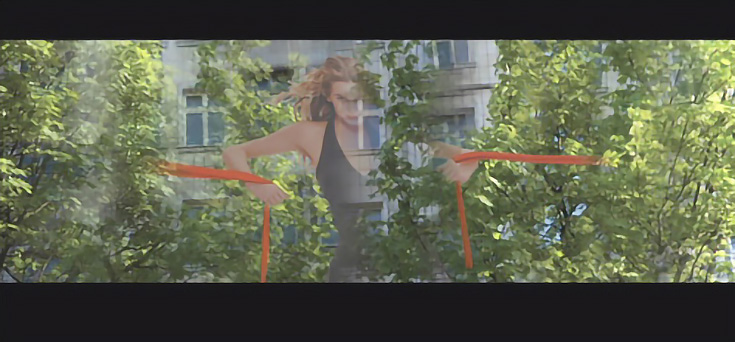
This is a clear example of “fine art” using advanced technology and unconventional media that even art historians are recognizing as a bonafide movement.
With this precedence, can any other kind of digitally created artistic expression be excluded from being designated as fine art? Digital and graphic art (regardless of their commercial use) is not a new style—it is, and always has been, an advancement in medium, and as such belongs to the realm of fine art!
As art reflects life, new generations of artists are moving beyond “traditional” media into the digital and mixed-media realm. With this change, the notion that “fine art” can not stretch to encompass art done in a different way, or for a different purpose, increasingly becomes an archaic viewpoint.
What about reproductions, or graphic design?
Graphic arts have traditionally been deemed a step-sister to fine arts because they are easily reproducible, are consumer oriented, and are often created by hired workers while the artist remains distant and uninvolved.
But wouldn’t this viewpoint deny what Warhol did in the 60’s? Underlying his intent was the celebration of objects not previously found worthy.
Reproducing images in silkscreen was Warhol’s way—and now our generation can reproduce art in ways Warhol never dreamed of. It’s the logical next step of Warhol’s commentary on the world of art.
Fine art purists think that reproduction in any way distorts the original. (Ironically, the original Mona Lisa can not even be viewed with naked eyes, yet 95% of the planet is familiar with it by reproduction—and it’s still considered fine art.)
Purists also claim that even the best reproductions offer a diluted loss of complexity, scale and texture. Even with advancements in printing, that statement is still true.
But how is the original affected when a reproduction is made? The original remains the original and will always be so.
Fine art boundaries are always evolving, and it is important to remember that even the decorative arts of the 1930’s (which were once termed “kitsch”) are now museum pieces of the Art Deco movement.
With a new world of technological options and endless ways to express ourselves, it is my belief that the old, outdated idea of fine art (which suggest that only “traditional” art is worthy) misses the artist’s mission completely.
Yes, a graphic artist may have his or her work reproduced in magazines, billboards, screen savers and the like, but what remains original is the first intent of the artist: to create an amazing sensory experience.
Isn’t that creative intent—found in the heart, mind and soul of the artist—the “fine” part of fine art?
If it isn’t, then what is?

This post may contain affiliate links.