
Do you watermark your artwork online? You know, by adding some sort of copyright statement right over the top of your images like this?
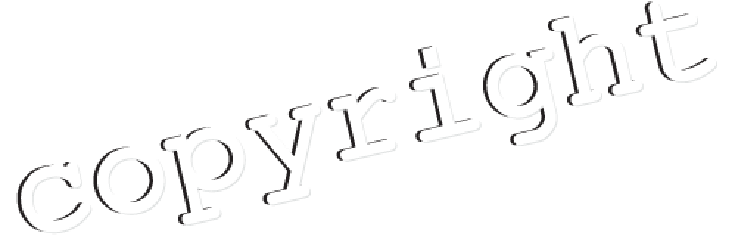
Naturally, not all watermarks are that extreme, but watermarking is still a fairly common practice among artists and photographers who display their work on the internet. From my perspective, however, it’s not really necessary—and it’s even a little off-putting, to tell you the truth.
As I was thinking about watermarking while writing this article, I came up with two reasons why artists would want to watermark their art. The first, of course, is to keep people from “stealing” your images to sell your artwork themselves (either by making actual prints of your work, or just by distributing it digitally).
And the second reason is simply to make sure that anyone who sees the image knows that you created it—this might be necessary if someone grabs one of your images for a blog post and forgets to mention your name.
Now, I completely support artists’ rights to protect their images from theft—don’t get me wrong—but my problem with watermarking is that more often than not it completely ruins how the piece looks online. And it doesn’t matter if the watermark is HUGE (sprawling across the entire image) or placed near the bottom right corner like the time and date from a digital photo. . . either way, it changes and distorts the artwork.
Plus, it pretty much screams “I don’t trust you” to anyone viewing your art. (And don’t EVEN get me started on websites that disable the right-click to prevent people from saving images to their computer. . .)
So what’s an artist to do?
Well I say leave the watermark off. If you’re worried about people stealing your artwork, just make sure you’re not uploading large, high-resolution images to your website. Keep your images under 200kb (or thereabouts) and there’s no way someone could print off your images at a high enough quality to sell.
(Plus, it’ll also increase how fast your web pages load, which is always good.)
As for people using your images without permission on their own websites, many times that’s done in ignorance, and a simple copyright message at the bottom of your website or underneath each image works just as well as one stamped across your artwork in the first place.
In the end, I just think the benefits of NOT watermarking outweigh the risks. And with more and more online artists going sans watermark these days. . . what do you think? Is it time for you to switch as well?

This post may contain affiliate links.