
Within the first two decades of the 20th century, a new art movement began that was unlike any other. . .
Cubism
Started by Georges Braque and Pablo Picasso, most Cubist works are immediately recognizable due to their flattened, nearly two-dimensional appearance; an inclusion of geometric angles, lines, and shapes; and a fairly neutral color palette.
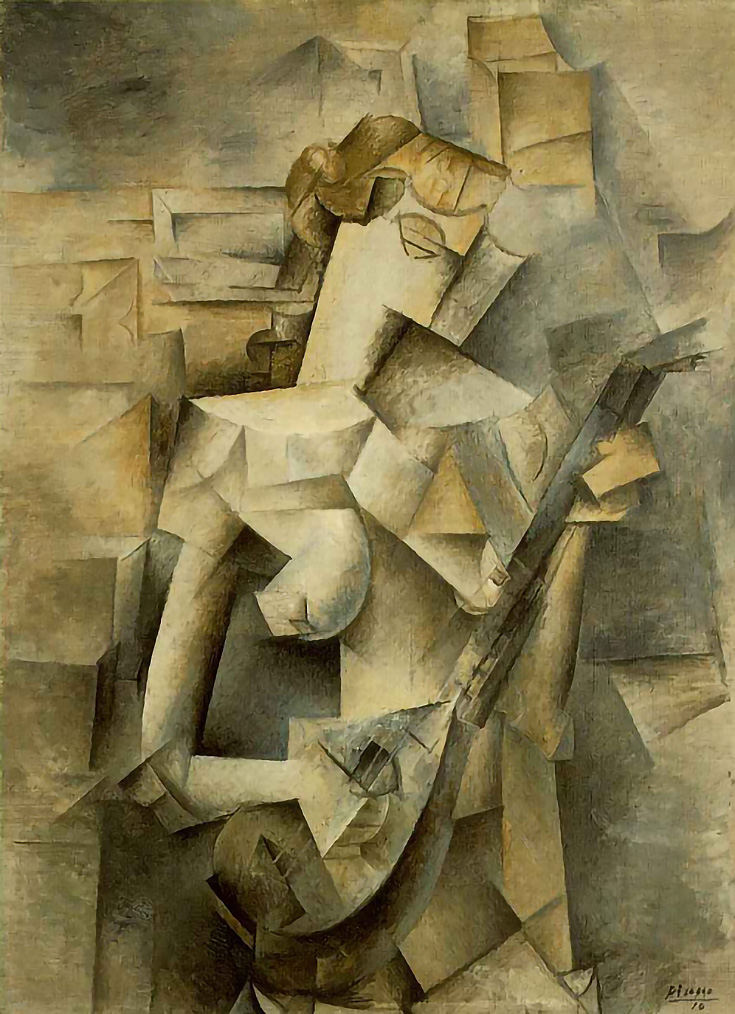
As the movement evolved, color, texture, and graphic elements (like text) were added, to the point where later Cubist works often appeared more like collage than anything else. But Cubism wasn’t just a specific “style” or “look”—it actually allowed artists an entirely different way of seeing and depicting real-life objects.
What is Cubism?
Unlike traditional still-lifes, landscapes, or portrait paintings, Cubist paintings aren’t meant to be realistic or life-like in any way. Instead, after looking at the subject from every possibly angle, the artist will piece together fragments from different vantage points into one painting.
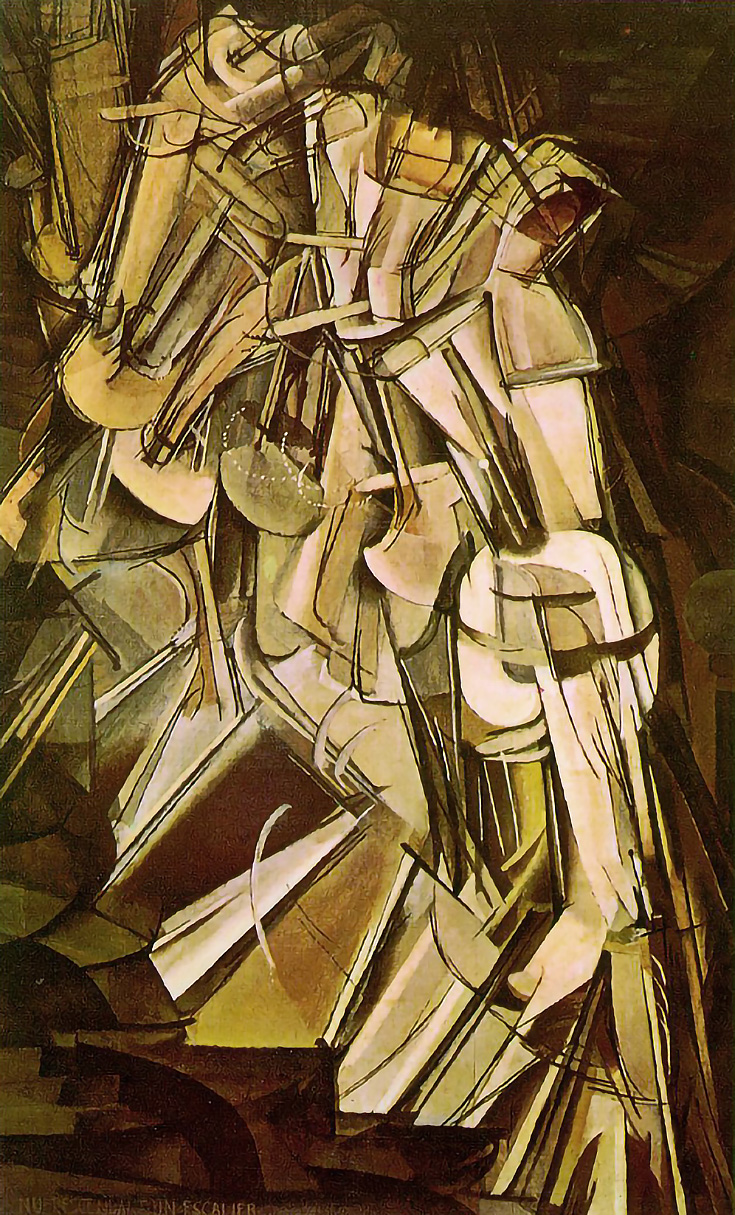
In doing this, the artist is attempting to give a fuller, more detailed explanation of the subject—breaking past barriers of space and time, like in the famous painting by Marcel Duchamp entitled Nude Descending a Staircase (seen above.)
This type of Cubism is called Analytic Cubism, and it’s usually what comes to mind when people think of Cubist artwork.
Synthetic Cubism on the other hand was a natural extension of Analytic Cubism. Instead of breaking a subject down into pieces, it involved assembling pieces already available into a collage. Here’s an example by Georges Braque, entitled Tenora.
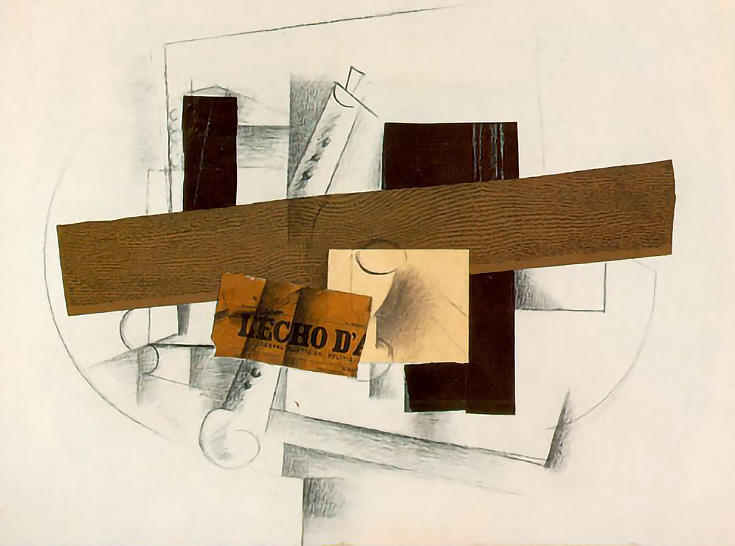
As you can see, Synthetic Cubism is still fairly geometric, and some pieces (like this one) incorporate traditional media as well as found objects.
Famous Cubist Artists
The most famous Cubist is probably Picasso, who created the famous anti-war painting Guernica and thousands of other modern artworks, with Braque a distant second. . . even though Braque was just as instrumental as Picasso was in founding Cubism.
Paul Cézanne (although not a part of the Cubist movement himself) is often credited with sparking Braque’s first attempts at painting a Cubist landscape. Cézanne’s paintings separated objects into basic shapes—cubes and spheres, mostly—which directly led to Cubism’s use of fractured, geometric planes.
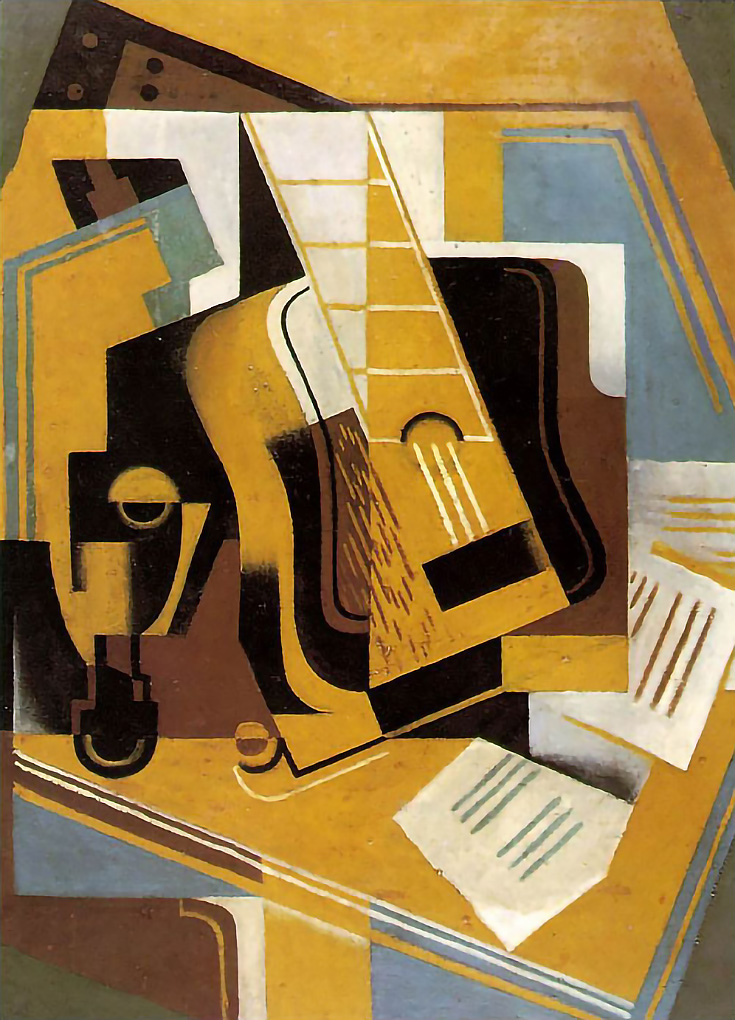
Other Cubist artists include Jaun Gris (whose work seems to almost bridge Cubism with Art Deco) and artists like Marcel Duchamp (whose artwork actually spanned a variety of styles and movements).
You can see some of the Art Deco similarities in The Guitar, by Jaun Gris, below.
Nowadays, Cubism seems like just another facet of abstract art, but in reality, it came first—and it directly influenced most of the abstract art of the 20th century.
In fact, it’s nearly impossible to imagine the 20th century without Cubism, Picasso and the others. . . it would be a very different world of art than the one we know.

This post may contain affiliate links.