Georges Braque: Cubism’s other Creator

Published Jun. 26th 2007

Georges Braque was a French painter born in 1882, and the co-creator of the Cubist art movement.

Although never as popular as Picasso, who is widely known for his Cubist paintings, Braque was nearly as influential in spreading the new art movement.

Interestingly enough, Georges Braque actually got his start as an interior house painter in his family’s business. He then transitioned into fine art in the early 1900s.
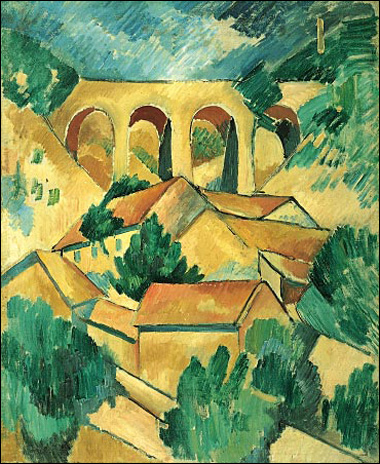
Viaduct at L'Estaque by Georges Braque

When just starting out, Braque was influenced by some of the most prominent painters of his time—first Matisse and the Fauves with their bold, wildly colorful paintings; and soon after, Cézanne and Picasso.

In fact, his earliest work makes me think of a cross between Cézanne and the Fauves, with a bit of Gauguin thrown in.
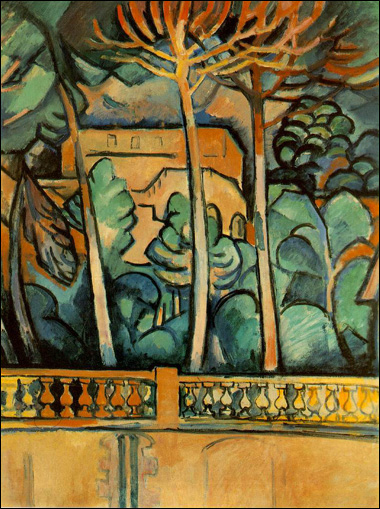
Terrace of Hotel Mistral by Georges Braque

It’s interesting to see how his work progressed: becoming flatter, and less colorful. Here you can see the influence of the Fauves beginning to wane.
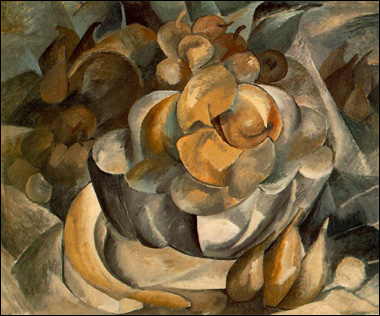
Fruit Dish 1909

By 1910, Braque was closely working with Picasso. Around that time the art movement known as Cubism slowly took shape.

Their paintings tried to show objects from every direction at once—a truly Cubist, or multi-sided perspective.
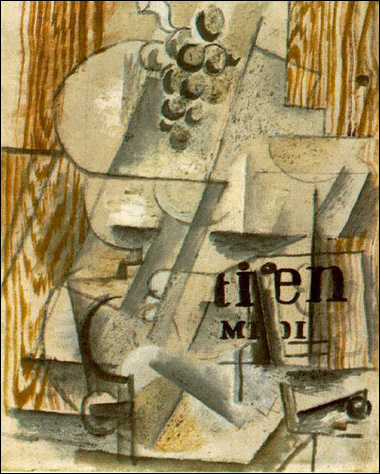
Fruit Dish - Quotidien du Midi 1912

It’s easy to mistake Braque’s work around that time period for a Picasso, or vice versa. In fact, Picasso once said that he couldn’t even tell the difference.

That’s because beyond just working together, they often painted the same objects, like violins. Add to that a similar cubist twist, and it becomes even more difficult.
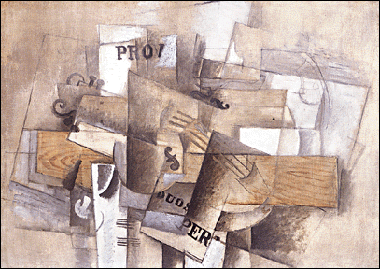
Still Life with Violin 1913

The two artist’s partnership ended when Braque left Paris to fight in World War I. After returning from the war, he still continued to paint, but alone.

From that time on, until the end of his life, his artwork focused on increasingly flattened shapes, collage-work, and textural additions to his paintings.

Georges Braque died in 1963 at the age of 72.

Did you like this article?
Please stumble it so others will find it or check out the related posts below.
Finally, my "big project" is finished! It’s been a crazy day with a lot going on, but foliotwist.com is finally live and online! Since I’ve kept it a complete secret up until launch, here’s a quick (mostly visual) overview of what it does. . .read more
Within the first two decades of the 20th century, a new art movement began that was unlike any other—Cubism. Started by Georges Braque and Pablo Picasso, most Cubist works are immediately recognizable due to their flattened, nearly two-dimensional appearance; an inclusion of geometric angles, . . . read more
Born in 1869, Henri Matisse was a widely influential French painter who lived in the early 20th century. He was really more of an intellectual artist than an emotional artist, although you might not guess that from his work alone. You would guess it from his previous occupation, however. Befor. . . read more
Pablo Picasso—born Pablo Diego José Francisco de Paula Juan Nepomuceno María de los Remedios Cipriano de la Santísima Trinidad Clito Ruiz y Picasso—is quite possibly the most famous artist that has ever lived, both during his own life and now decades after. Not only was Picasso a tremendously . . . read more
Fauvism was a brief art movement made up of several young Parisian painters at the beginning of the 20th century. Primarily a transitional movement, Fauvism came about as the art world shifted from the Post-Impressionism of Van Gogh, Cezanne, and Gauguin to the Cubism of Braque and Picasso. Le. . . read more
Stay current.
Subscribe to EmptyEasel's free weekly newsletter for artists. Sign up today!
EE Writers
Lisa Orgler Alyice Edrich Luke Montgomery Gordie Carver Stede Barber Doris Glovier Rose Welty Robert Sloan

Want to be a writer for EmptyEasel? Paid positions are available, and the perks are great. :) Contact us to apply