
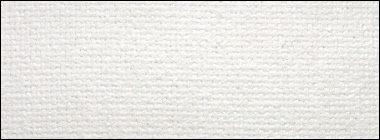
What brand of canvas do you buy? Do you buy pre-stretched canvas? Pre-primed? Do you make your own canvases?
Beginning painters often buy cheap art canvases at arts and crafts stores just to save money. But once you’ve been painting a while, you will get to the point where the quality of your canvas begins to reflect upon your art.
The great thing is that purchasing good quality canvases doesn’t always have to be expensive—in fact, the idea for this article came about when Rob at FrenchCanvas.com asked me to review one of his pre-stretched, pre-primed canvases and let you all know what I thought.
In return, he’s offered a 10% artist discount on his entire line of canvases (through November 14th 2007) to all EmptyEasel readers who call in and mention the discount when they order. That seemed like a good deal, so I decided to take him up on the idea and see how good his stretched canvases really are.
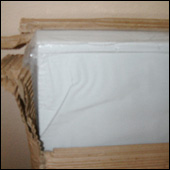 Within a few days Rob sent me a free one (Thanks Rob!) via Fed-Ex. It arrived in great shape, the packaging was snug and correctly sized, and I knew the canvas hadn’t been bounced around on its way over.
There was even a layer of plastic for further protection.
The dimensions of the canvas were 30″ by 40″ and 1¾” deep, weighing only 7.5 lbs and properly braced in the back with a crossbar (as any large canvas should be). I shook it around a little by the crossbar and each corner, and it was very solid.
The canvas was also stretched tightly and stapled very securely in place. When you buy a canvas it should sound almost like a drum if you rap your fingers on the stretched canvas face. This canvas was no exception, and actually was large enough that it reminded me of a timpani, or kettledrum.
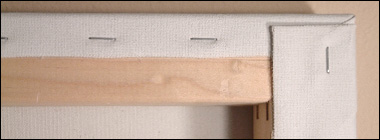
Each corner fold on the canvas was clean and neat, and every square inch of canvas had been primed—even the sections that wrapped around the sides and back.
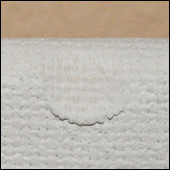 Overall the primer coverage was perfect, very evenly applied with enough tooth to grab the paint and give a little texture.There was one defect in the primer (visible in the image to the left) about the size of an pencil eraser, but to be honest I’m not entirely sure that I didn’t do it myself when prying open the packaging.
Either way, it’s a minuscule flaw and could easily be sanded down, or just ignored and painted over.
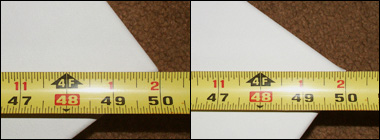
I also ran a measuring tape diagonally across the canvas to make sure it was perfectly square. Both diagonal measurements (from top-left to bottom right, and top-right to bottom-left) should be exactly the same. If one diagonal is longer than the other, then you know that the canvas is skewed.
FrenchCanvas did it right—it measured a perfect 50″ for both.
And if you don’t already know, there is definitely one huge benefit when you buy pre-primed gallery wrap canvases like this one. Many artists (myself included) would rather save money by not framing every painting, but we still want them to look good.
Gallery wrap canvases really are the best solution; unlike cheaper canvases there are no staples on the sides, so instead of framing you can just paint around the edges, hang it, and you’re done.
 Overall I was very impressed with FrenchCanvas.
Rob sent me an excellent quality painting canvas which makes me feel comfortable recommending them to you—especially with this 10% off sale.
If you’re looking to buy a canvas today, this week, or through November 2007, I’d encourage you to give them a try. Just remember to mention EmptyEasel for the discount.

This post may contain affiliate links.