
 Green is made by mixing blue and yellow, and is a secondary color. It’s also red’s opposite and complementary color on the traditional artist’s color wheel.
The meaning of green:
Trees, grass, and shrubs are all predominantly green, which links the color permanently to nature and makes it a symbol of growth and even fertility. Most colors of green also convey a sense of well-being and health.
Gender issues: Is green a “boy” color or “girl” color?
Well actually, it’s neither. Green is generally considered to be a gender-neutral color. However, darker shades of green may be interpreted as more masculine than lighter tints of the color—but that’s often the case with any hue.
Green in society:
Green universally means “Go” if you’re driving up to a stop light, and no matter where you are in the world on Saint Patrick’s Day, wearing the color green will probably be expected.
Some commercial uses of the color green include the Jolly Green Giant (promoting fresh vegetables and good health) and the animated green M&M (promoting the sexy side of chocolate.)
 Environmentalist organizations often use green as well, which is an obvious choice given the color’s ties with nature.
And (in the USA at least) green is linked to money, or cash, which creates yet another connection between the color green and the idea of growth and well-being.
Pigments that make green paint:
If you’re looking to make your own paint, Pthalocyanine is the most common ingredient in greens overall, although there are also a fair amount of chromium hydroxide based green paints.
If you’d rather use natural pigments, umber has some greenish qualities and is used in a few green paints as well.
Common types of greens in oil painting:
Some of the more widely used greens are Pthalocyanine Green, Hooker’s Green, Sap Green, Permanent Green Light, Viridian Green, and Prussian Green.
I actually have tubes of Viridian and Permanent Green Light, but I don’t use them that often. Mixing green is pretty easy once you know how, so that’s what I usually do.
Famous green paintings:
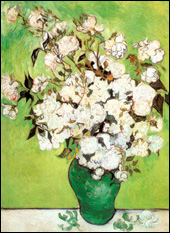
There are probably quite a few artists and painters throughout history who made great use of green, but the ones I want to point out are Van Gogh, whose popular Vase of Roses is at the beginning of this article; and Claude Monet, painter of fields and flowers and water lilies.
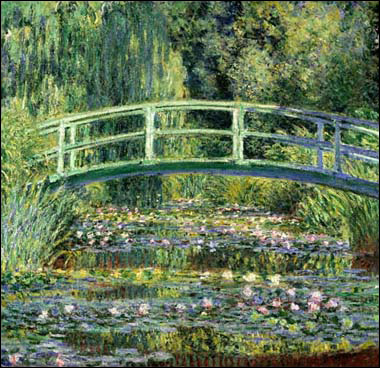
Now that’s a lot of green.

This post may contain affiliate links.