
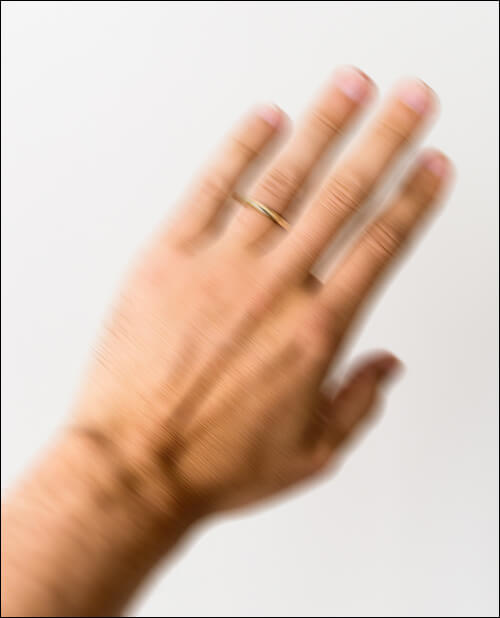
If you’re working on a painting with fine details, a steady hand is extremely important. The last thing you want is for an errant brushstroke to ruin an area you’ve worked on for the past hour.
While shaky hands can occasionally be a sign of more serious health problems, most of the time there are easy solutions that anyone can use. The six following suggestions are methods that I’ve used, and most likely they’ll work for you too.
1. Paint with less detail
Although this suggestion doesn’t exactly improve steadiness, many times artists dive into a small intricate sections and get frustrated when the tiniest movements of their hand create problems.
See if you can suggest the object you’re depicting, instead of trying to replicate it exactly. Also consider switching to a larger brush size; it will force you to work on a bigger scale and avoid obsessing over the inconsequential stuff.
2. Eat something
Most of the times that my hands begin shaking, I haven’t eaten anything within the last three or four hours.
The longer you go without eating, the lower your blood sugar level becomes, which can often cause tremors as well as overall tiredness.
Raising your blood sugar level can be as simple as eating an apple or a granola bar – anything with simple sugars and carbohydrates. For a longer fix, grab something with more protein in it, like yogurt or mixed nuts.
3. Take a break
If you’ve been painting for a long stretch, it may be that you’re just too tired to keep your hands steady. At that point a short rest is really what you need.
And, if you’re working until your hands actually begin to shake uncontrollably, you might want to consider calling it a day. At that point your muscles are fatigued, and only sleep will help them recover.
4. Support your hand and arm
I don’t often use this method, but I know many watercolorists and graphite artists who do. Placing a wooden dowel or any other kind of support underneath your forearm will greatly reduce the strain of holding a brush steady.
Since a lot of tremors come from the shoulders and upper arm, removing some of the constant strain from those muscles will definitely help reduce the problem.
5. Open a window
When using oil paints especially, it’s important to have good ventilation.
If the fumes are getting to you, not only will your hands be shaking, but you’ll probably also feel lightheaded and dizzy.
Open a window or two if you can and seal up all open containers of paint thinner you might have lying around. Fans are great too, so if you’ve got one handy, use it.
6.Warm up and stay loose
Tight muscles are more likely to quiver when you least want them to, so stretch out if you’ve been doing heavy lifting, and get the blood flowing to your hands before you start painting.
Remember, by trying too hard to hold still you’re probably just making the tremors worse. You’ll need to intentionally relax, instead. Don’t hold your breath, allow your shoulders and neck muscles to loosen, and try to keep tabs on your body to see if you’re tensing up.

This post may contain affiliate links.